Asteroids Are Distinctly Larger Than Meteors
Many people confuse space rocks, but size is the primary difference. We explore how these celestial bodies vary in scale, from mountain-sized asteroids to dust-grain meteors.
Asteroids Are Distinctly Larger Than Meteors
Space is filled with rocky debris of every conceivable size. While we often use the terms asteroid and meteor interchangeably, they represent very different objects in our solar system. Understanding the scale of these objects helps us appreciate the mechanics of the cosmos.
Near-Earth Asteroid Watch
Powered by Flarient — embed this on your site →
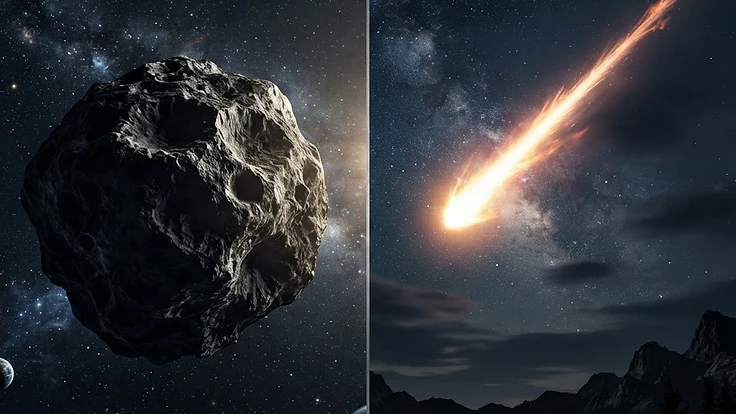
At the most basic level, the difference between an asteroid and a meteor is a matter of size and location. An asteroid is a substantial rocky body orbiting the sun, while a meteor is merely the light streak we see when a small piece of space debris enters our atmosphere. This distinction defines how we study and track them.
The Science Behind It
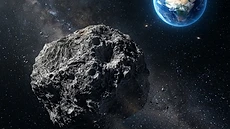
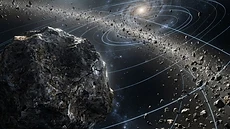
Asteroids are essentially the leftover building blocks from the formation of the solar system. These objects can range from a few metres across to hundreds of kilometres in diameter. Many follow orbits in the main belt between Mars and Jupiter, though others are categorised as a near-Earth asteroid if their path brings them close to our planet.
When a piece of rock, known as a meteoroid, enters the Earth's atmosphere, it faces extreme friction. This interaction causes the object to burn up, creating a brilliant streak of light that we call a meteor. Most meteors are no larger than a grain of sand or a small pebble.
They rarely reach the ground, and those that do are renamed as meteorites.
Astronomers at NASA CNEOS keep a close watch on these larger bodies to ensure we understand their trajectories.
It is worth remembering that the vast majority of meteors we see each night are tiny fragments that never pose a threat to our planet.
A true impact event, like the one that led to The Chicxulub Impact and the Dinosaur Extinction, involves a massive asteroid rather than a stray meteoroid.
Real-World Implications
Our understanding of these objects influences how we monitor the safety of our planet. While tiny meteoroids cause occasional satellite glitches or brighten our night sky, massive asteroids present a different set of challenges. Scientists analyse past events in our archive to better predict the future behaviour of these celestial wanderers.
For most people, these space rocks are harmless sources of wonder. Observing a meteor shower is a common way to connect with the cosmos, but the actual danger of an impact is statistically low. We focus our resources on tracking the larger objects that could disrupt global infrastructure if they were to collide with Earth.
Monitoring these objects is part of a broader effort to understand the space environment. Just as we track the [K-index](/ #kp) to understand geomagnetic storms, we track rock distribution to map our solar neighbourhood. This layered approach to space safety ensures that we remain informed about potential risks from above.
What You Can Do
Staying informed about the objects moving near our planet is easier than ever. You can explore the data for yourself by visiting our [asteroids](/ #asteroids) tracking section, which provides up-to-date information on upcoming close approaches. Seeing the data visualised makes the vast scale of the solar system feel much more tangible.
If you are interested in the broader spectacle of the night sky, you might consider booking [guided aurora tours](https://vi.me/HuXHi) in locations like Iceland, Norway, or Alaska. These trips offer an incredible perspective on the natural phenomena that occur high above our atmosphere.
Always verify your local conditions first to ensure you have the best chance of clear skies.
Educational tools are also available for those who want to integrate these insights into their own websites. Utilising our embeddable widgets allows you to share real-time space data with your audience. This helps spread awareness about the reality of our place in the solar system.
Key Takeaways
The fundamental difference between asteroids and meteors remains a matter of size and atmospheric entry. Asteroids are the large, orbiting bodies that define our solar system's history, while meteors are the fleeting flashes of light produced by tiny grains of dust. Both are essential parts of the celestial landscape.
By keeping track of these objects, we turn the unknown into the understood. Whether you are observing a meteor shower from your backyard or studying the latest orbital data for a distant asteroid, you are participating in the age-old human tradition of watching the sky. Knowledge is the most effective tool we have for ensuring our continued safety in a busy universe.
For observers
For readers interested in trying to observe or photograph meteors and other night sky targets, one accessible route is a compact portable setup that simplifies field sessions. Explore a compact capture setup
Ad · Affiliate link. Flarient may earn a commission if you purchase through this link, at no additional cost to you.
People Also Ask
Can a meteor become a meteorite?+
Yes. A meteor is only the light streak created when a space rock enters the atmosphere. If any piece of that rock survives the intense heat of entry and lands on the surface of the Earth, that remaining fragment is then classified as a meteorite.
How often do asteroids hit Earth?+
Small meteoroids strike the atmosphere every day, causing harmless meteors. Larger impacts from significant asteroids are extremely rare. The most famous example is the Chicxulub impact, which occurred 66 million years ago. Modern space monitoring programs help us track these larger bodies to prevent future surprises.
Are all asteroids found in the asteroid belt?+
No. While the main asteroid belt between Mars and Jupiter contains millions of asteroids, many others follow diverse paths. Some asteroids have orbits that bring them near Earth, while others are found in the outer solar system or as companions to larger planets.
Continue Reading
Forecast These Questions
View all →Express your probability on these active forecast questions.
Will a near-Earth object pass within 1 Lunar Distance this quarter?
35%
Community
Will a near-Earth object pass within 1 Lunar Distance this quarter?
35%
Community
Will a newly discovered asteroid larger than 10m pass within 5 LD this month?
35%
Community
Will a near-Earth object pass within 5 Lunar Distances this month?
45%
Community