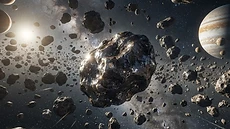
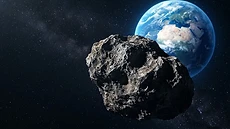
Asteroids Pose a Tsunami Risk to Coastal Regions
While rare, impacts from space have the potential to trigger massive displacement waves. We examine the physics behind asteroid-induced tsunamis and the reality of this planetary threat.
Asteroids Pose a Tsunami Risk to Coastal Regions
The vast majority of the Earth is covered by water, making the oceans the most likely destination for any incoming celestial body. When a large near-Earth asteroid makes a close approach or impacts our planet, the consequences for coastal regions can be severe. Understanding this risk requires looking at the mechanics of energy transfer and the historical evidence left behind in our geological record.
Near-Earth Asteroid Watch
Powered by Flarient — embed this on your site →
Most people imagine craters on land when they consider asteroid impacts, yet the maritime reality is far more significant. An object striking the deep ocean displaces an enormous volume of water, creating waves that travel across entire basins. This phenomenon, while infrequent on a human timescale, serves as a reminder of our planet's ongoing relationship with the solar system.
The Science Behind It
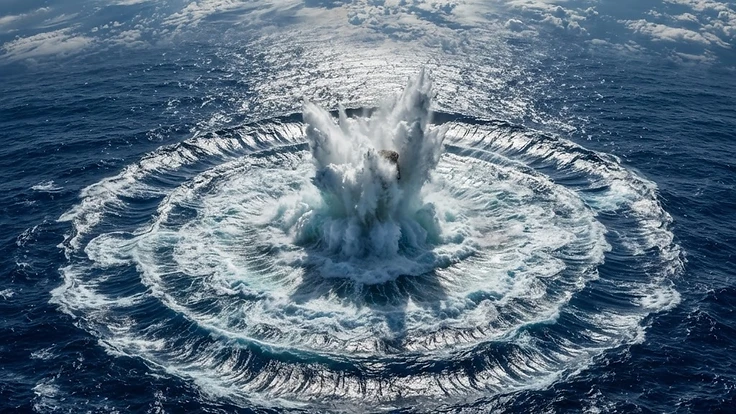
When a high-speed projectile strikes the ocean, it imparts a massive amount of kinetic energy instantaneously. Unlike an earthquake, which raises the sea floor to displace water, an asteroid impact creates a transient cavity in the ocean that can reach several kilometres in depth. As this cavity collapses under the force of gravity, it generates a series of radial waves that propagate outwards.
Researchers use sophisticated modelling to estimate the wave heights generated by various impactors. The scale of the resulting tsunami depends on the object's size, density, and velocity. A stony or metallic asteroid, such as those often studied in the context of defining the distinctions between asteroids and meteors, creates a unique splash that differs from the energy release of a seismic tectonic shift.
Real-World Implications
Coastal infrastructure is rarely designed to withstand the energy of an impact-generated tsunami. These events differ from standard surges because they may arrive with shorter warnings, leaving little time for traditional evacuation procedures. Protecting global trade routes, undersea cables, and coastal cities requires a clear understanding of the statistical likelihood of such impacts occurring.
Beyond immediate physical damage, the disruption to economic centres would be catastrophic. The international scientific community, including NASA CNEOS, monitors the skies to identify potential threats early.
Tracking these objects is a critical aspect of planetary defence, ensuring that we move from a reactive posture to one of informed preparation.
What You Can Do
Stay informed about the objects currently crossing our orbital neighbourhood by consulting reliable data sources. You can use tools to monitor incoming space weather or potential impacts, which helps in contextualising risks beyond the atmosphere. Engaging with the glossary can also help you understand the technical terminology used by astronomers when they describe orbital parameters.
For those interested in the broader context of space, monitoring essential tools for real-time space weather monitoring offers a comprehensive view of our environment. Understanding the variables involved in planetary threats helps demystify the science. It encourages a more grounded perspective on how we interact with the cosmos, turning abstract fear into actionable knowledge.
Key Takeaways
Asteroid-induced tsunamis are a physically plausible event, though they remain extremely rare in the context of human history. The energy released by an oceanic impact creates displacement waves that can affect coastlines far from the impact point. Our ability to predict and potentially deflect such objects has improved significantly in recent decades.
We live on a dynamic planet within a bustling solar system, and the risk of impact is one we manage through constant observation. By continuing to support planetary monitoring, we ensure that the next major impact remains a subject of scientific study rather than a surprise to our civilisation. Understanding these risks is part of a mature relationship with our place in space.
People Also Ask
How large does an asteroid need to be to cause a tsunami?+
An asteroid typically needs to be at least several hundred metres in diameter to generate a tsunami capable of causing widespread damage across ocean basins. Smaller objects may cause localised displacement, but their energy dissipates rapidly before they reach distant coastlines.
Are there historical records of asteroid-induced tsunamis?+
Geological evidence suggests that large impacts in the past have triggered significant displacement waves. While we lack a modern, witnessed event, researchers have identified ancient sediment layers that point to oceanic disturbances consistent with major impact events throughout the history of the planet.
How do scientists track potential asteroid threats?+
Astronomers use ground-based and space-based telescopes to scan the sky for moving objects. By determining their trajectory and velocity, NASA and other organisations calculate the probability of a future impact, allowing for early detection and potential mitigation efforts to protect the planet.
Continue Reading
Forecast These Questions
View all →Express your probability on these active forecast questions.