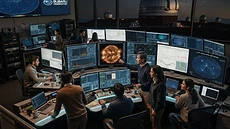
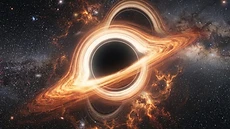
Astrophysics and the Study of the Universe
Astrophysics applies the laws of physics to understand the celestial bodies and phenomena that shape our universe. From solar cycles to stellar evolution, it provides the framework for our place in space.
Understanding the Fundamentals of Astrophysics
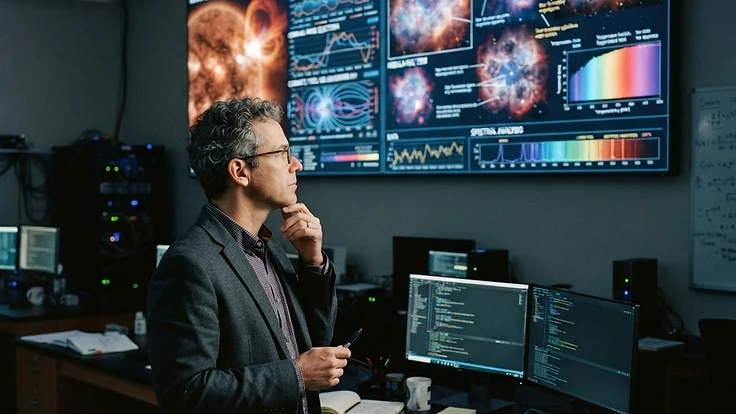
Astrophysics is the branch of astronomy that employs the principles of physics and chemistry to ascertain the nature of celestial objects rather than merely their positions or motions. It serves as the primary scientific lens through which we view the cosmos, moving beyond simple observation to explain why stars shine, how galaxies form, and the processes driving the solar wind.
By analysing the electromagnetic radiation emitted by distant bodies, researchers determine composition, temperature, density, and magnetic field strengths. This discipline bridges the gap between laboratory physics and the vast, often extreme, environments of deep space. It transforms our understanding from static points of light in the night sky into dynamic, evolving structures governed by universal physical laws.
The Science Behind It
The foundation of astrophysics relies on the application of fundamental forces like gravity, electromagnetism, and nuclear physics to astronomical scales. One primary focus is solar physics, which investigates the magnetic mechanisms driving the 11-year solar cycle. These cycles influence the intensity of space weather, such as the expulsion of charged particles during a solar flare, as detailed in The Physics of Solar Flares: Composition and Consequences.
Astrophysicists also model the behaviour of plasma and radiation fields as they interact with planetary magnetic environments. They utilise data from observatories to track the understanding the solar wind and its velocity and how these currents shape the heliosphere. By studying the lifecycle of stars, ranging from protostars to supernovae, they reconstruct the history of chemical enrichment that allowed planets to form.
Real-World Implications
Modern infrastructure relies heavily on the fruits of astrophysical research. Our reliance on satellite systems for navigation, global communication, and climate monitoring requires constant vigilance against space weather events. A sudden [geomagnetic storm](/ #kp) can induce currents in power grids or alter the orbital decay of satellites, making astrophysical forecasting a matter of national security and economic stability.
Furthermore, the study of [near-Earth asteroids](/ #asteroids) is a critical application of orbital mechanics and planetary science. By identifying the trajectories of these objects, researchers protect against the risks of future impacts. Understanding these phenomena allows us to mitigate threats, manage the risk of technical failure, and ensure the safety of human activities in cislunar space.
What You Can Do
To engage with astrophysics, one must learn to interpret the raw data that drives our modern understanding of the heavens. You can monitor the state of the local environment by checking the [local aurora forecast](/ #local) to see if solar activity is currently influencing your region. Many hobbyists use this data to plan their observations of the night sky, including the search for geomagnetic activity.
For those drawn to the phenomena firsthand, guided aurora tours in countries like Iceland, Norway, Canada, and Finland offer an educational window into these cosmic interactions. You can also explore accessing reliable real-time space weather data to track ongoing events as they unfold.
Whether you are a student or an enthusiast, staying informed about these cycles helps you appreciate the profound interconnectedness of our planet and the Sun.
Key Takeaways
Astrophysics is not a distant, abstract pursuit, but a rigorous science that defines our technological resilience. It provides the essential knowledge needed to manage space-based assets and predict the long-term impact of solar activity on Earth. By studying these processes, we secure our capability to thrive in an increasingly space-faring era.
As we look toward the future, the integration of astrophysical data into our decision-making processes will only grow in importance. Understanding the universe is the first step in protecting our place within it. Whether through professional research or personal observation, this field offers a continuous invitation to explore the mechanics of reality.
From theory to sky
Astrophysics connects distant processes with the points of light visible above us, from stellar evolution to galaxies and star clusters. For readers curious to move from explanation to personal observation, explore an accessible way to capture the sky and compare what you record with the science described here.
Ad · Affiliate link. Flarient may earn a commission if you purchase through this link, at no additional cost to you.
People Also Ask
What is the difference between astronomy and astrophysics?+
Astronomy is primarily observational, focusing on the mapping, classification, and naming of celestial objects. Astrophysics is the branch of physics that applies mathematical models and physical laws to explain the mechanisms, internal structures, and processes that govern how these celestial objects evolve over time.
How do astrophysicists study objects they cannot visit?+
Since we cannot reach most objects, astrophysicists rely on the electromagnetic spectrum. By using telescopes and space-based sensors, they analyse light, radio waves, and X-rays. These signals carry signatures of chemical composition, temperature, and motion, allowing scientists to reconstruct the physical properties of distant stars and galaxies.
Does astrophysics involve chemistry?+
Yes, it frequently overlaps with chemistry through a sub-field called astrochemistry. This discipline studies the abundance and reactions of molecules in the universe and their interaction with radiation. It is essential for understanding how stars form from molecular clouds and how planets develop their atmospheres.
Continue Reading
Forecast These Questions
View all →Express your probability on these active forecast questions.