Consumer Hardware for Monitoring Space Weather Conditions
Modern space weather tracking is no longer reserved for government agencies. Discover the accessible consumer-grade devices and digital resources that allow enthusiasts to monitor solar activity from home.
Monitoring Space Weather Through Personal Technology
Space weather influences our lives in ways that often go unnoticed, from the stability of global communication networks to the visibility of the aurora. While professional observation requires expensive satellite networks, consumer technology has democratised how we track solar conditions. Engaging with this data allows anyone to better understand the celestial environment above us.
Technological progress has made complex solar data streams accessible to hobbyists and professionals alike. By utilising specific hardware and digital interfaces, you can gain a deeper understanding of solar activity without needing a background in astrophysics. This proactive approach transforms how we perceive our place in the solar system.
Live Solar Flare Monitor
Powered by Flarient — embed this on your site →
The Science Behind It
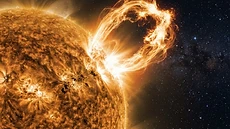
Solar activity is driven by the sun's magnetic field, which follows a cycle approximately 11 years long. During the solar maximum, coronal mass ejections can travel through space at speeds reaching 3,000 km/s, far exceeding the typical solar wind speed of 400 to 700 km/s.
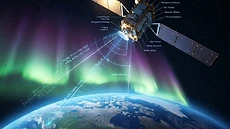
When these charged particles arrive at Earth, they interact with the magnetosphere. We measure this disturbance using the Kp index, a scale from 0 to 9 that indicates geomagnetic activity. Storm intensity is further categorised by the G-scale, ranging from G1 to G5, which reflects the potential impact on power grids and satellite operations.
Solar flares are classified by their X-ray brightness, ranging from A and B class to the most intense X class. Each letter represents a tenfold increase in energy output. Understanding these metrics is vital for anyone using equipment to monitor solar impacts on our planet.
Real-World Implications
Geomagnetic disturbances can interfere with high frequency radio communications and satellite navigation systems. Strong storms can induce currents in long-distance electrical transmission lines, potentially causing infrastructure issues. Monitoring these conditions helps explain why signal degradation might occur during periods of high solar activity.
We often look at solar imagery to predict these events before they impact our technology. Beyond infrastructure, space weather affects orbital drag for satellites operating in low Earth orbit. Even for those not working in aerospace, understanding the mechanics of coronal mass ejections provides context for technological performance.
What You Can Do
Begin by integrating reliable monitoring tools into your daily routine. Many enthusiasts use software-defined radio kits to listen for changes in the ionosphere. You should also consult a local aurora forecast to determine if your area is positioned for potential visibility during geomagnetic events.
If you are planning an adventure, guided aurora tours in countries like Iceland, Norway, Canada, Finland, Sweden, and Alaska provide excellent opportunities to witness this phenomenon safely. You can also explore essential tools for real-time space weather monitoring to deepen your personal observatory capabilities. Many users find it helpful to embed on your site live solar data feeds to keep their own audiences informed.
For travellers who want expertise over guesswork, guided Northern Lights excursions in Sweden, Scotland and Alaska pair you with photographers who read the aurora oval in real time.
Key Takeaways
Space weather tracking is an evolving field that bridges the gap between professional science and public interest. By monitoring indices like the Kp and tracking solar flare data, you turn abstract scientific phenomena into a tangible hobby. This awareness builds a more informed perspective on how our sun dictates conditions here on Earth.
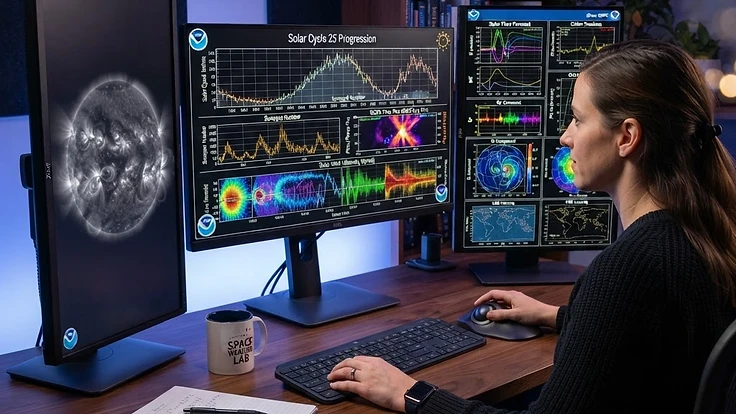
As we progress through Solar Cycle 25, which began in December 2019, the relevance of these tools will only increase. Whether you are an amateur astronomer or simply someone interested in the elements of nature, the information is now at your fingertips. Keeping consistent records helps you connect historical past events with the current state of our star.
People Also Ask
How do solar flares affect satellites?+
Solar flares release intense X-ray and ultraviolet radiation that heats the upper atmosphere, causing it to expand. This increases atmospheric drag on satellites in low Earth orbit, which can alter their trajectory, decrease their lifespan, or force operators to perform complex manoeuvres to avoid collision.
What is the difference between a solar flare and a CME?+
A solar flare is an intense burst of electromagnetic radiation coming from the release of magnetic energy. A coronal mass ejection, or CME, is a massive eruption of solar material and magnetic fields. Flares reach Earth at light speed, while CMEs take days to travel across space.
Can I see solar activity without a telescope?+
You cannot directly observe solar flares without professional-grade solar telescopes equipped with specific filters. However, you can monitor the secondary effects of solar activity, such as auroras in high-latitude regions or disturbances in radio communications, using accessible consumer electronics and online data dashboards.
Continue Reading
Forecast These Questions
View all →Express your probability on these active forecast questions.