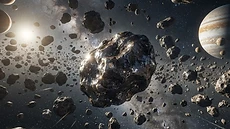
History Records Earth's Violent Asteroid Impacts
Earth has a violent history of asteroid impacts that have shaped our planet's evolution. Understanding these events helps us better prepare for the future as we track near-Earth objects today.
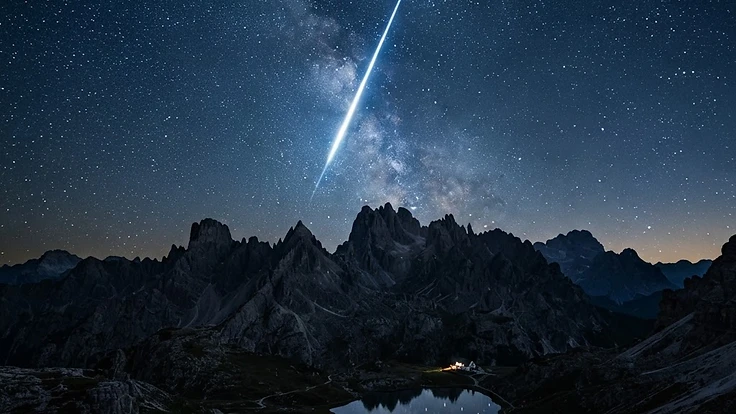
Earth's Violent History of Asteroid Impacts
Earth is not a lonely rock floating through a void. It occupies a crowded neighbourhood in the solar system, occasionally intersecting with the paths of ancient space debris.
While our atmosphere acts as a robust shield against smaller particles, larger bodies have reached the surface throughout history. These events have fundamentally altered the course of life and the physical landscape of our world.
The Physics of Impact Events
Asteroids are remnants from the early formation of the solar system, often composed of rock, metal, or carbonaceous material. When a near-Earth asteroid enters our atmosphere, it encounters intense pressure and friction.
Near-Earth Asteroid Watch
Powered by Flarient — embed this on your site →
Smaller objects usually disintegrate into harmless dust or small meteorites due to the heat generated by compression. However, objects larger than a few hundred metres possess enough kinetic energy to survive the descent and strike the surface with devastating force.
An impact of this scale releases energy equivalent to millions of tonnes of TNT. This energy creates shockwaves, heat pulses, and seismic activity that can trigger tsunamis and long-term climate shifts.
As detailed in The Celestial Construction of Asteroids, the composition of these bodies dictates how they interact with our atmosphere. A solid metallic asteroid will penetrate deeper than a fragile, porous one.
Real-World Implications of Planetary Defence
While major impacts are rare, the threat they pose is taken seriously by global space agencies. Organisations like NASA CNEOS maintain constant watch over the skies to identify potential hazards early.
An impact event could disrupt global communications, threaten infrastructure, or cause widespread ecological collapse. This is why planetary defence has moved from theoretical modelling to active tracking and testing of mitigation strategies.
Studying past craters allows scientists to understand the frequency of such events. You can browse through our archive to learn more about how humanity has documented these cosmic interactions throughout time.
Modern technology helps us analyse the trajectory of these objects long before they reach the vicinity of Earth. If we detect a threat, we gain the precious time needed to organise an international response to deflect the object.
What You Can Do to Stay Informed
Staying informed about space weather and near-Earth objects is easier than ever. Monitoring the skies provides perspective on our place in the solar system and the dynamic nature of our environment.
You can use our embeddable widgets to display real-time tracking data on your own website or digital dashboard. This keeps the data accessible without the need for constant manual searching.
Understanding these threats does not mean living in fear. It means gaining a practical appreciation for the scale of our universe and the systems in place to protect our home.
For those curious about the terminology used by researchers, our glossary provides simple definitions for complex space science concepts. Keep your interest piqued by exploring our blog for more insights into the mechanics of our solar system.
Key Takeaways
Asteroid impacts are a natural part of Earth's history, but modern science has given us the tools to track them effectively. We no longer wait for the sky to fall before we take notice.
By leveraging global observation networks, we continue to refine our ability to predict and prepare for cosmic visitors. Vigilance remains our best defence in an active and changing solar system.
Our role is to observe, record, and maintain a clear understanding of the space environment. With the right data and tools, we turn uncertainty into manageable information.
People Also Ask
How often do asteroids hit Earth?+
Small asteroids hit Earth daily, but they usually burn up in the atmosphere. Large, city-killing impacts are extremely rare, occurring on timescales of tens of thousands to millions of years. Space agencies continuously track potential hazards to ensure we have ample warning time for any significant near-Earth objects.
Was the Chicxulub impact the largest in history?+
The Chicxulub impact, which occurred 66 million years ago, is the most famous for causing the mass extinction of the dinosaurs. While massive, Earth has experienced even larger impacts during its early formation, such as the event that likely formed our Moon billions of years ago.
How do scientists detect incoming asteroids?+
Scientists use a global network of ground-based and space-based telescopes to scan the sky for moving points of light. By calculating the orbits of these objects, experts can determine if a near-Earth asteroid will pass close enough to pose a risk to the planet in the future.
Continue Reading
Forecast These Questions
View all →Express your probability on these active forecast questions.