The Celestial Construction of Asteroids
Asteroids are more than just space rocks; they are the literal building blocks of our solar system. Understanding their formation reveals the history of our cosmic backyard.

The Celestial Construction of Asteroids
When we look up at the night sky, we see static pinpricks of light. In reality, our solar system is a violent, churning laboratory of constant construction and destruction.
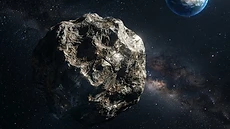
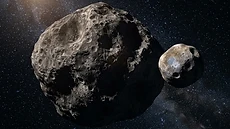
At the centre of this story lie asteroids. These objects are not merely chaotic debris but represent the leftover scraps from the birth of the planets themselves.
Near-Earth Asteroid Watch
Powered by Flarient — embed this on your site →
The Science Behind It
Roughly 4.6 billion years ago, a massive cloud of gas and dust collapsed under its own gravity to form the Sun. The remaining material formed a flattened, swirling disc around the infant star.
In this disc, tiny particles of dust collided and stuck together through electrostatic forces. Over time, these clumps grew into larger bodies called planetesimals.
Some of these bodies grew large enough to become planets. Others, caught in the gravitational tug-of-war between giants like Jupiter and the Sun, were prevented from coalescing into a single planet.
These stranded fragments remained in orbit, cooling and hardening into what we now classify as an asteroids. They are effectively fossils, preserving the chemical composition of the early solar system in their structure.
Composition varies wildly depending on where the body formed. Objects closer to the Sun are often rocky, while those further out contain significant amounts of ice and carbon-rich material.
Real-World Implications
Modern science relies on these bodies to understand our origins. Analysing their makeup helps us model the conditions that allowed Earth to become habitable.
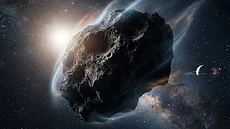
Beyond their historical value, these near-Earth asteroid objects represent a practical challenge. Their orbits can change due to gravitational nudges, requiring constant vigilance.
Monitoring these objects is a global priority to ensure we are never blindsided by a large impactor. As noted in Global Teams Track Near-Earth Asteroids, the collaborative effort to catalogue the sky is essential.
Technology is now evolving to mitigate these threats, ranging from deflection modelling to advanced tracking arrays. This is critical because the consequences of a major impact, similar to the Chicxulub event 66 million years ago, remain a sobering reality of life in the inner solar system.
What You Can Do
Public interest in space safety has never been higher, and staying informed is the best way to separate fact from sensationalist headlines. You do not need to be an astronomer to keep tabs on what is moving in our orbital neighbourhood.
Many researchers and enthusiasts rely on real-time data to track orbital paths and close approaches. Exploring the glossary can help clarify complex terminology, ensuring you understand the distinction between a harmless flyby and a potential hazard.
If you manage a space-related website, you can easily embeddable widgets to provide your audience with accurate, live data on space objects. Making this information accessible to the wider public fosters a better understanding of our cosmic environment.
Key Takeaways
Asteroids are the pristine archives of our solar system's formation. They remind us that the sky is dynamic and constantly shifting, rather than a fixed stage.
While the prospect of an impact often dominates the conversation, these objects serve primarily as windows into the past. By studying their composition and paths, we gain a clearer picture of how our home planet came to be.
Staying engaged with the latest orbital tracking data is the most responsible way to view space. It transforms the unknown into something manageable and deeply fascinating.
Continue Reading
Forecast These Questions
View all →Express your probability on these active forecast questions.
Will a near-Earth object pass within 1 Lunar Distance this quarter?
35%
Community
Will a near-Earth object pass within 1 Lunar Distance this quarter?
35%
Community
Will a newly discovered asteroid larger than 10m pass within 5 LD this month?
35%
Community
Will a near-Earth object pass within 5 Lunar Distances this month?
45%
Community