Humanity Has Successfully Landed on Multiple Asteroids
Exploring the small bodies of our solar system is no longer science fiction. Discover which asteroids humans have visited and what those missions taught us about the origins of our planet.
Humanity Has Successfully Landed on Multiple Asteroids
For most of history, asteroids were mere points of light in the night sky. Today, they represent the final frontiers of robotic exploration within our solar neighbourhood.
Near-Earth Asteroid Watch
Powered by Flarient — embed this on your site →
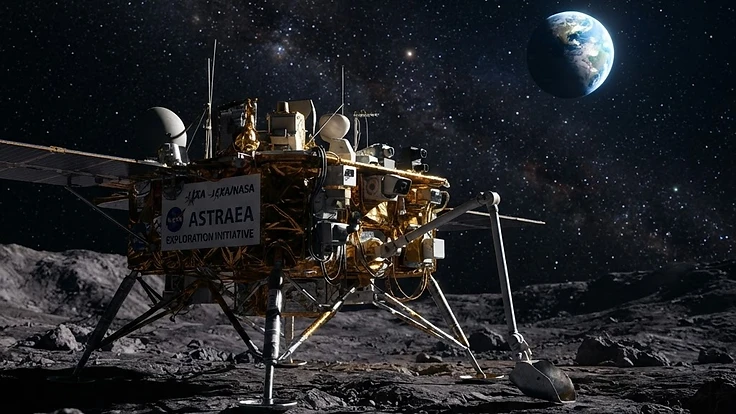
Landing on an asteroid is a feat of engineering that requires navigating complex gravity wells and uncertain terrain. These missions offer a rare glimpse into the primordial material that shaped the early solar system.
The Science Behind It
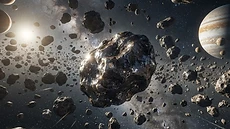
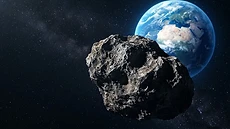
Asteroids are essentially cosmic rubble left over from the formation of planets. Most reside in the main belt between Mars and Jupiter, though any near-Earth asteroid poses a unique scientific target.
Unlike landing on the Moon, where gravity is relatively uniform, landing on an asteroid is complicated by irregular shapes and minimal gravitational pull. Spacecraft must touch down with extreme precision to avoid bouncing off the surface or causing debris to scatter.
Mission controllers often rely on micro-gravity manoeuvres to approach these bodies. They must analyse the rotation rate and surface composition to ensure the lander stays put, often using harpoons or thrusters to stay anchored.
These missions often link back to broader cosmic events, such as the the physics of asteroid impact tsunamis, helping us understand the risks posed by these objects.
Real-World Implications
Studying these bodies is not just about academic curiosity. It provides critical data on the raw materials available in space, which could one day support deep space exploration.
If we can master resource extraction on these rocky worlds, we might reduce the cost of travelling through space. This is a primary focus for many global space programmes that view asteroids as potential fuel stations.
Understanding asteroid composition also refines our planetary defence strategies. By learning how these objects are put together, we gain a better chance of diverting any that threaten our home planet.
Just as we monitor solar storms to protect our infrastructure, tracking these rocks is vital. You can keep an eye on current space activity through our archive of data to see how we track objects over time.
What You Can Do
You do not need to be a rocket scientist to follow these missions. Many organisations offer public data that allows you to track the trajectory of incoming objects.
If you are interested in the wider space environment, take a look at the embeddable widgets to integrate live tracking into your own space enthusiast website or dashboard. Being informed is the first step toward understanding our place in the cosmos.
While our focus here is on rocky bodies, do not forget the effects of the Sun on our space environment. Whether you are observing [solar activity cycles and the truth about flare intensity](https://flarient.com/blog/solar-activity-cycles-and-the-truth-about-flare-intensity) or watching for meteors, having the right tools makes all the difference.
Key Takeaways
We have moved from observing asteroids to actively touching their surfaces. Each landing serves as a technological milestone that pushes the boundaries of our navigation and remote sensing capabilities.
These missions bridge the gap between pure physics and future industrial application. As we continue to refine our reach, the lessons learned from these small worlds will dictate the success of our long-term presence in space.
People Also Ask
Which was the first asteroid humans landed on?+
The first asteroid to have a landing was 433 Eros, which was visited by NASA's NEAR Shoemaker spacecraft in 2001. Although it was designed as an orbiter, the probe made a controlled descent to the surface at the end of its mission to gather more data.
Can we mine asteroids for resources?+
Yes, asteroid mining is a subject of significant scientific interest. Many asteroids contain water ice, precious metals, and silicates that could be used for building and fueling spacecraft, potentially creating a sustainable space-based economy in the coming decades.
What is the difference between an asteroid and a meteoroid?+
The main difference is size and location. Asteroids are larger bodies that orbit the Sun. Meteoroids are smaller fragments, often pieces of asteroids or comets. When a meteoroid enters the atmosphere and burns up, it is called a meteor, and if it reaches the ground, it becomes a meteorite.
Continue Reading
Forecast These Questions
View all →Express your probability on these active forecast questions.