Noctilucent Clouds Form Through Rare Atmospheric Conditions
Discover how noctilucent clouds emerge at the edge of space, turning the night sky into a glowing display of electric blue light.
Noctilucent Clouds Form Through Rare Atmospheric Conditions
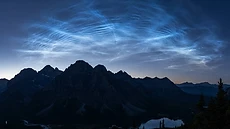
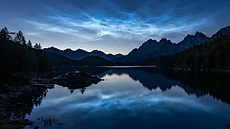
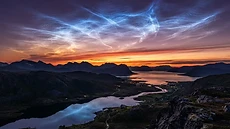
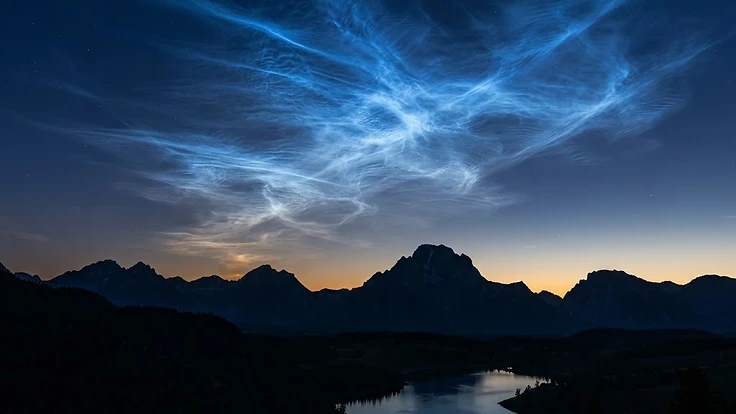
Noctilucent clouds are some of the most striking phenomena in our night sky. Also known as night shining clouds, these ethereal structures appear as wispy, electric blue filaments long after the sun has dipped below the horizon. They reside in the mesosphere, roughly 80 kilometres above our planet.
While ordinary clouds drift in the lower atmosphere, these clouds occupy the very edge of space. They are best viewed during the twilight hours of summer when the sun is positioned just low enough to illuminate them from below. Understanding why they form requires a look at the extreme environment of the upper atmosphere.
The Science Behind It
These clouds are essentially ice crystals clinging to fine particles. For them to materialise, three specific conditions must be met simultaneously within the mesosphere. These include the presence of water vapour, cold temperatures, and meteoric dust.
Water vapour reaches these high altitudes through a process of upwelling from the lower atmosphere. Temperatures in the mesosphere must drop below minus 120 degrees Celsius, which occurs naturally during the summer solstice in polar regions. Finally, the dust acts as a nucleation point for ice to crystallise.
These dust particles often originate from micrometeoroids burning up as they enter the atmosphere. As these tiny grains settle at the mesopause, water molecules freeze onto their surfaces. This layer is often described in the study of the atmospheric physics of noctilucent clouds as a unique laboratory for environmental science.
Real-World Implications
Noctilucent clouds are more than just a beautiful spectacle. They serve as sensitive indicators of changes in our upper atmosphere. Because they require such precise temperature and moisture levels, they provide data on long-term climate trends at the mesopause.
Scientists monitor these clouds to track how greenhouse gases influence the upper layers of our atmosphere. While carbon dioxide traps heat at the surface, it actually cools the mesosphere. This cooling effect contributes to the increasingly frequent and bright appearances of these clouds.
Studying these phenomena helps us understand the complex balance of our global climate system. By analysing how they behave, researchers improve their modelling of atmospheric dynamics. This work complements our broader efforts to monitor [how space weather influences life on Earth](/blog/how-space-weather-influences-life-on-earth).
What You Can Do
If you want to observe these clouds, timing is essential. You must be at a mid to high latitude during the summer months when the sun remains at a low angle. The ideal viewing window opens about an hour after sunset or an hour before sunrise.
Keep track of local conditions to improve your chances of success. You can use our [local aurora forecast](/aurora-forecast) to check visibility from your area, as the same clear sky conditions that favour aurora spotting are ideal for noctilucent cloud hunting. If you find yourself in the far north during the peak season, guided aurora tours in countries like Iceland, Norway, and Sweden often provide excellent local knowledge on timing and optimal viewing locations.
For those managing their own community pages, our embeddable widgets offer a way to share real-time sky updates with your audience. Staying prepared is the best way to catch these elusive, fleeting displays of light.
Key Takeaways
Noctilucent clouds represent the intersection of space and atmosphere. They form when water vapour freezes onto meteoric dust at the edge of the Kármán line. Because they respond to subtle shifts in atmospheric composition, they remain vital for climate research.
These clouds remind us that the sky above is constantly in motion. Whether you are searching for them or monitoring the K-index for geomagnetic activity, there is always something happening overhead. Take a moment on a clear summer night to look up and appreciate the rare beauty of the mesosphere.
Browse through our archive if you are interested in seeing records of previous atmospheric observations. Learning the glossary of atmospheric terms can help you better identify what you see in the sky.
Twilight observation
Because noctilucent clouds can turn summer twilight into a delicate blue display, readers may want to watch for them and record their changing shapes. For those interested in documenting the scene, explore an observation setup as one compact route from skywatching to capture.
Ad · Affiliate link. Flarient may earn a commission if you purchase through this link, at no additional cost to you.
People Also Ask
Can you see noctilucent clouds during the day?+
No, noctilucent clouds are too thin to be seen against the brightness of the daytime sky. They can only be observed during twilight when the sun is below the horizon but still bright enough to illuminate the high-altitude ice crystals, making them glow against a dark sky background.
Are noctilucent clouds related to the aurora?+
No, they are entirely different phenomena. While auroras are caused by solar particles hitting the upper atmosphere, noctilucent clouds are simply ice crystals forming in the mesosphere. They are both visible at night, but their physical origins and the altitudes at which they occur are completely separate.
Why are noctilucent clouds becoming more frequent?+
Scientists believe that the increase in methane emissions in the lower atmosphere may be a primary driver. As methane migrates into the upper atmosphere, it oxidises to create more water vapour, which provides the necessary fuel for these clouds to form more often and at lower latitudes than previously observed.
Continue Reading
Forecast These Questions
View all →Express your probability on these active forecast questions.