Solar Flares and Earthquakes: Examining the Scientific Connection
Public interest often links solar activity to tectonic shifts, but does a physical mechanism exist between solar flares and earthquakes? We investigate the science.
Solar Flares Do Not Trigger Earthquakes
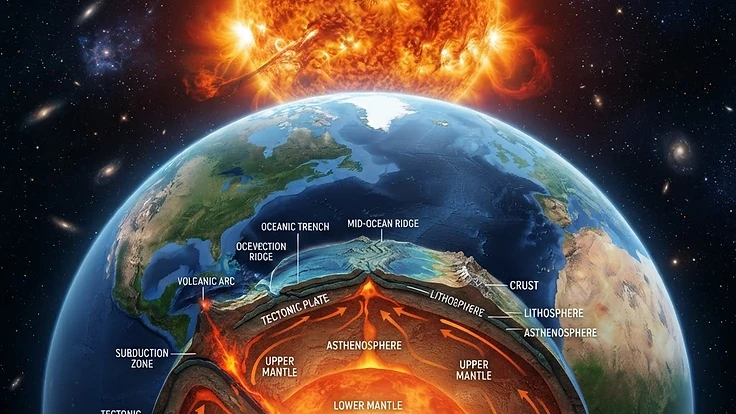
Solar activity drives intense phenomena in our upper atmosphere, yet the notion that solar flares cause earthquakes remains a pervasive misconception. While both sun and earth exhibit powerful periodic behaviour, the physical connection between electromagnetic radiation and tectonic plate movement has never been established by geophysicists.
Live Solar Flare Monitor
Powered by Flarient — embed this on your site →
Energy from a solar flare arrives as light or particles, affecting the magnetosphere and ionosphere, but it lacks the physical force to penetrate the crust. Understanding the distinction between space weather and geology is vital for interpreting modern solar observations correctly.
The Science Behind It
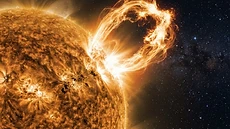
Solar flares are sudden, intense bursts of radiation originating from active regions on the sun. These events, often accompanied by coronal mass ejections, send streams of charged particles through space at thousands of kilometres per second.
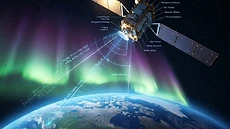
Upon reaching Earth, these particles interact with our planetary magnetic field, causing fluctuations in the Kp index and creating geomagnetic disturbances. These interactions occur hundreds of kilometres above the surface, primarily near the aurora oval.
Conversely, earthquakes are the result of accumulated strain within the Earth's lithosphere. Driven by mantle convection and plate tectonics, seismic energy releases when friction along a fault line is suddenly overcome. There is no documented pathway for solar electromagnetic energy to reach deep crustal structures to influence this process.
Real-World Implications
Misunderstandings regarding solar influence often obscure the real, documented impacts of space weather. Solar flares affect high-frequency radio waves, satellite navigation, and power grids, as detailed in our guide on Solar Flares and Their Impact on Power Grids.
Infrastructure providers must monitor the strongest storms on record to ensure resilience against geomagnetic induction. These storms can disrupt electrical distribution centres, leading to operational instability that differs entirely from seismic activity.
Focusing on false correlations between flares and tremors diverts attention from genuine risks. Professionals in aerospace engineering and grid management must rely on empirical data to protect assets against legitimate threats from solar radiation and particle events.
What You Can Do
Discerning scientific reality from speculation requires access to reliable data. You can observe the sun in real time using high-resolution solar imagery to understand current activity cycles without falling for alarmist claims.
For those interested in witnessing the atmospheric consequences of solar particles, guided aurora tours in countries like Iceland, Norway, Canada, and Sweden offer a chance to view the effects of active space weather safely. Exploring the glossary helps define the technical nuances between solar cycles and seismic cycles.
If you manage a technical website, consider using our embeddable widgets to share verified space weather data with your audience. This helps disseminate accurate information while keeping your site visitors informed about real-time events in the magnetosphere.
Key Takeaways
Solar flares represent the sun's explosive energy, while earthquakes remain a product of internal planetary dynamics. No credible evidence exists to link the two, despite the frequency with which such claims appear on the internet.
Understanding the separation between these domains improves our collective ability to respond to actual environmental hazards. Rely on verified reports from bodies like NOAA SWPC to stay informed about solar conditions.
By maintaining a focus on empirical science, we ensure that our approach to both solar and seismic preparedness remains grounded in observable reality.
People Also Ask
Can solar flares trigger volcanic eruptions?+
No. Similar to earthquakes, there is no scientific evidence that solar flares or geomagnetic storms have any influence on volcanic activity. Volcanism is governed by internal planetary heat and tectonic processes, which operate independently of solar radiation or electromagnetic interactions occurring in the upper atmosphere.
Does solar activity affect the Kp index?+
Yes. The Kp index is a primary measure of geomagnetic activity, tracking how much the Earth's magnetic field is disturbed by solar wind and solar flares. A higher Kp value indicates stronger geomagnetic storms, which correlate with more intense auroral displays and potential interference with orbital technology.
How often do major solar cycles occur?+
Solar cycles follow a roughly 11-year pattern. During the solar maximum, sunspot counts and solar flare frequency are at their highest. We are currently in Solar Cycle 25, which began in December 2019, and researchers continue to monitor these fluctuations to protect terrestrial and space-based infrastructure.
Continue Reading
Forecast These Questions
View all →Express your probability on these active forecast questions.