Solar Flares and Their Impact on Earth
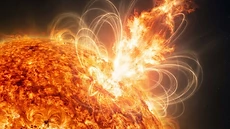
Solar flares are powerful bursts of radiation from the sun that can disrupt our technology. Understanding their impact is essential for modern life.
Solar Flares and Their Impact on Earth
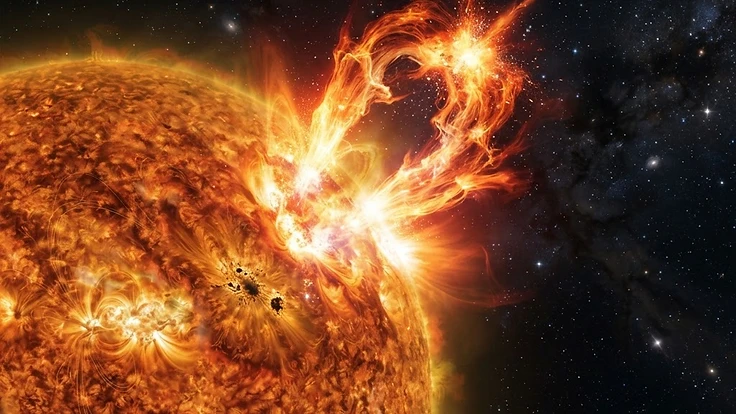
The sun acts as the lifeblood of our planet, providing the warmth and light necessary for survival. Yet, this giant star also periodically releases massive bursts of energy known as solar flares.
Live Solar Flare Monitor
Powered by Flarient — embed this on your site →
These events are not merely distant spectacles. When the sun throws a tantrum, the consequences reach all the way to our doorstep, affecting the satellites, power grids, and radio communications we depend on every single day.
The Science Behind It
Solar flares occur when magnetic energy that has built up in the solar atmosphere is suddenly released. The sun follows an 11 year cycle of activity, and we are currently in Solar Cycle 25, which began in December 2019.
Scientists categorise these flares based on their strength, ranging from the weakest A and B classes to the most intense X class. Each higher letter represents a ten-fold increase in power.
When a flare is accompanied by a coronal mass ejection, or CME, the sun ejects a massive cloud of solar plasma into space. While light reaches Earth in just over eight minutes, these solar winds travel much slower, typically at 400 to 700 kilometres per second.
Fast moving CMEs can reach speeds of 3,000 kilometres per second. When this material collides with our planet, it interacts with our magnetosphere, causing the geomagnetic disturbances that we measure using the G-scale.
Real-World Implications
Modern infrastructure relies heavily on delicate electronics, many of which are vulnerable to solar activity. Strong geomagnetic storms can induce electrical currents in long-distance power lines, potentially leading to transformer damage and widespread outages.
Satellite operations face equal risks. Increased atmospheric drag from solar heating can alter their orbits, while high-energy particles can damage sensitive onboard components, a reality often discussed in our analysis of astrophysics.
Communications are equally sensitive. High-frequency radio signals often used by aviation and maritime industries can experience significant interference, or complete blackouts, during intense solar events.
Even our navigation systems are not immune. Readers interested in the specifics of this phenomenon should explore our guide on how ionospheric storms impact GPS accuracy.
What You Can Do
Preparation begins with awareness. By monitoring solar imagery and real-time data, you can stay ahead of the weather in space just as easily as you watch the forecast for rain.
If you are an enthusiast or a professional, consider using our embeddable widgets to bring live space weather data directly to your own website or dashboard. This ensures that you and your community are never caught off guard by a sudden change in solar activity.
For those drawn to the beauty of the aurora caused by these flares, there are many ways to experience the spectacle in person. You might consider booking one of the many guided aurora tours offered across Iceland, Norway, Canada, Finland, Sweden, and Alaska to see the phenomenon under expert guidance.
Understanding the risks also encourages a deeper appreciation for the Earth magnetosphere and the invisible shield protecting life that keeps us safe from the worst of the sun's radiation.
Key Takeaways
Solar flares remain one of the most significant natural variables affecting our technological world. While we cannot stop these cosmic events, our ability to monitor and predict them has improved significantly in recent decades.
By staying informed, you can better understand both the risks and the wonders of our solar neighbour. Whether it is tracking a storm or simply learning more about the sun, knowledge remains our best defence.
People Also Ask
Can solar flares cause global blackouts?+
While highly unlikely to cause a total global blackout, severe solar storms can damage high-voltage transformers in power grids. This could result in regional, long-term power outages, but modern grid hardening techniques are continuously being improved to mitigate these specific risks to national infrastructure.
How do solar flares affect satellites in orbit?+
Solar flares increase the density of the upper atmosphere, which creates extra drag on satellites in low Earth orbit, causing them to lose altitude. Furthermore, intense radiation can cause electrostatic charging and damage sensitive electronic components, potentially leading to operational failures or shortened lifespans for satellites.
Are solar flares dangerous to humans on Earth?+
No, solar flares are not directly dangerous to humans on the ground. Earth's atmosphere and magnetic field provide a robust shield that absorbs the harmful radiation. The primary risks from solar flares are directed at our technology, power grids, and satellite-based communication systems.
Continue Reading
Forecast These Questions
View all →Express your probability on these active forecast questions.