Solar Flares and Their Impact on Human Health
Solar flares are powerful energy releases from the Sun, but do they influence human physiology? We explore the scientific consensus on space weather and its effects on our biology.
Solar Flares and Their Direct Influence on Human Biology
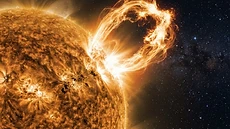
Solar flares represent massive bursts of radiation originating from the Sun, often coinciding with peak activity in the eleven year solar cycle. While these events can disrupt global infrastructure, the question of whether they directly affect human health remains a subject of intense scientific scrutiny.
Live Solar Flare Monitor
Powered by Flarient — embed this on your site →
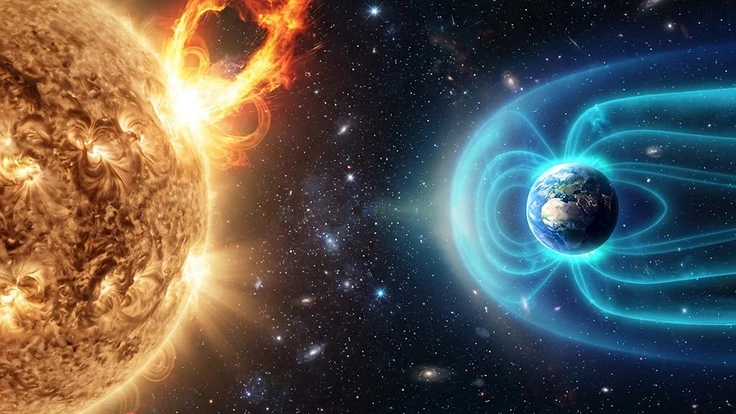
Most current evidence suggests that Earths atmosphere and magnetic field provide a robust defence against solar radiation. Because humans have evolved under the protective umbrella of the magnetosphere, we remain shielded from the bulk of high energy particles that define these solar events.
The Science Behind It
To understand solar flares, we must look at the electromagnetic spectrum. Flares are intense bursts of radiation across all wavelengths, from radio waves to X-rays and gamma rays. They originate when magnetic energy stored in the solar atmosphere is suddenly released.
While the light from a flare travels at 300,000 kilometres per second, reaching us in about eight minutes, the associated coronal mass ejections travel much slower. These clouds of charged particles typically move between 400 and 700 kilometres per second, though fast events can reach 3,000 kilometres per second.
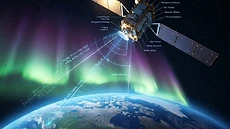
When these particles strike Earth, they interact with our magnetosphere to trigger a geomagnetic storm. This interaction creates the beautiful phenomenon known as the aurora, but the primary impact is on technological systems rather than human skin or internal organs.
Real-World Implications
Technological infrastructure is far more sensitive to solar activity than human biology. Large scale geomagnetic storms, measured by the Dst index or the G-scale, can induce currents in power grids and interfere with satellite communications.
These disruptions can lead to cascading failures in systems we rely on daily. As noted in studies regarding satellite shielding against the growing menace of space debris, the orbital environment is complex enough without adding solar induced electrical stress to critical hardware.
Because we are increasingly dependent on orbital assets, protecting our interconnected networks is a priority for modern space agencies. Researchers constantly analyse the data to improve our forecasting capabilities and safeguard the technologies that underpin global commerce.
What You Can Do
Staying informed is the best way to separate fact from alarmism. You can monitor live solar activity through a local aurora forecast to see if increased geomagnetic activity might provide a chance to view the night sky in a new light.
If you are planning to witness the northern lights, there are many guided aurora tours across Iceland, Norway, Canada, and Sweden that help visitors experience this wonder safely. By understanding the science, you can better appreciate the celestial mechanics without fearing invisible rays.
For those who manage technical infrastructure or simply enjoy tracking the skies, using embeddable widgets on your personal site can keep you updated on current solar conditions. Knowledge is the most effective tool in any form of preparedness.
Key Takeaways
Solar flares are spectacular manifestations of our star, but they do not pose a direct health risk to humans on the ground. Our atmosphere and magnetic field act as a highly efficient shield against the influx of solar radiation.
Instead of worrying about our biological health, we should focus on the resilience of our technological systems. Following the storm leaderboard for historical context provides a fascinating look at how our planet has weathered these events for millennia.
By staying engaged with reliable data, you can enjoy the beauty of space weather. Whether you are observing an auroral oval or tracking the solar cycle, the Sun remains a source of inspiration rather than a threat to our wellbeing.
People Also Ask
Do solar flares cause headaches?+
There is no credible scientific evidence linking solar flares directly to human headaches or other physical health symptoms. While some anecdotal reports exist, large-scale medical studies have failed to establish a consistent, replicable correlation between solar activity and individual physiological distress.
Can solar flares damage cell phones?+
Consumer electronics like smartphones are generally well-shielded from solar radiation. However, extreme geomagnetic storms can disrupt the satellite networks that provide GPS data and cellular signals, potentially causing temporary service outages or degraded performance for mobile devices reliant on these systems.
How are solar flares classified?+
Solar flares are classified by their X-ray brightness in the 1 to 8 Angstrom range. The classes are A, B, C, M, and X, with each letter representing a tenfold increase in energy output. X-class flares are the most intense and can trigger major radio blackouts.
Continue Reading
Forecast These Questions
View all →Express your probability on these active forecast questions.