Satellite Shielding Against the Growing Menace of Space Debris
Orbital debris poses a persistent threat to global satellite infrastructure. Discover how engineers utilise advanced shielding and tracking to protect our critical assets in space.
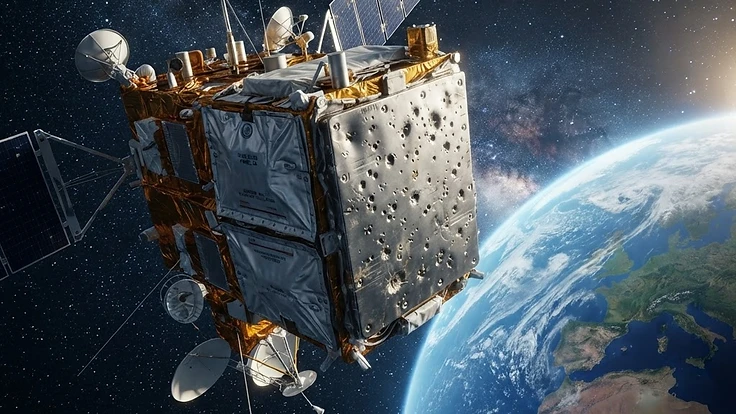
Satellite Shielding Against the Growing Menace of Space Debris
The space surrounding Earth is becoming increasingly crowded. From defunct rocket stages to remnants of past collisions, orbital debris travels at extreme velocities, making even tiny fragments dangerous to functional hardware. Protecting these assets is a central challenge for modern aerospace engineering.
Satellites rely on a combination of active tracking and passive protection systems to survive in this volatile environment. As we launch more technology into orbit, understanding the mechanics of these safeguards is essential for maintaining global communication, navigation, and environmental monitoring networks.
The Science Behind It
Space debris travels at speeds reaching several kilometres per second. At these velocities, a piece of debris the size of a marble carries the impact energy of a heavy vehicle. Scientists use ballistic impact modelling to design protective structures that can absorb or deflect such kinetic energy.
Engineers often employ a Whipple shield, which uses a thin sacrificial outer layer to break up incoming projectiles. When debris strikes this outer layer, it shatters into a cloud of smaller, less damaging particles, which are then absorbed by a secondary, thicker wall behind it. This layered defence system is standard for sensitive missions and stations orbiting near the 408 km altitude of the International Space Station.
Beyond physical armour, satellites use precise manoeuvring capabilities to avoid known objects. Organisations like NASA maintain databases of tracked objects to predict close approaches and trigger course corrections.
For further context on how we manage these risks and the importance of space sustainability, one can read more about The Global Responsibility for Clearing Orbital Debris.
Real-World Implications
Satellite failures caused by debris collisions have massive consequences for daily life. We rely on orbital hardware for everything from banking transactions to weather forecasting, and losing these services disrupts the global economy. A single catastrophic collision can create thousands of new fragments, further exacerbating the danger to other spacecraft.
Space weather also compounds the risk by affecting the density of the upper atmosphere. During high-intensity geomagnetic activity, atmospheric heating can expand the density of the thermosphere, increasing the drag on satellites. You can analyse past disturbances by reviewing the storm leaderboard to understand how these events have historically impacted infrastructure.
Engineers must therefore account for both physical debris and orbital degradation caused by solar cycles. As we progress through Solar Cycle 25, which began in December 2019, monitoring the influence of the sun becomes even more critical for satellite longevity. For an in-depth look, visit Monitoring Solar Storms to Protect Satellite Infrastructure.
What You Can Do
Staying informed about the environment in which satellites operate is the first step toward understanding space safety. You can track real-time space weather data using Flarient's free dashboard to see how geomagnetic conditions like the Kp index fluctuate, which influences satellite drag. These metrics help you understand the broader context of the space environment.
If you are interested in the wider implications of orbital safety, you might look into The Kessler Syndrome and the Future of Earth Orbit. Understanding these risks helps promote awareness of space sustainability. Technology now allows anyone with an interest in the heavens to contribute to public data projects or engage with orbital tracking tools.
Key Takeaways
Protecting satellites from debris is a multifaceted task that combines physical shielding with sophisticated collision avoidance manoeuvres. As the density of the orbital environment increases, these technologies must evolve to maintain our vital space-based services.
Awareness of both man-made debris and the natural influence of solar weather is crucial. By keeping an eye on the space environment, we ensure that our digital infrastructure remains resilient. Continued international cooperation remains the best defence against the long-term challenges of space congestion.
People Also Ask
How small can space debris be to still damage a satellite?+
Even debris as small as a millimetre can cause significant damage to sensitive satellite components. Because these objects travel at velocities of several kilometres per second, their kinetic energy is immense, capable of puncturing protective covers or damaging solar arrays upon impact.
What is the Kessler Syndrome?+
The Kessler Syndrome is a theoretical scenario where the density of objects in low Earth orbit becomes so high that collisions between objects cause a cascade. Each collision generates more debris, increasing the likelihood of further impacts and eventually making certain orbits unusable for future missions.
How do satellites avoid hitting debris?+
Satellite operators use data from global space surveillance networks to track known debris. When a potential collision is detected, operators perform a manoeuvre by firing the satellite's thrusters to alter its orbital path. These adjustments ensure the satellite moves safely away from the projected path of the debris.
Continue Reading
Forecast These Questions
View all →Express your probability on these active forecast questions.