The Global Responsibility for Clearing Orbital Debris
Space debris poses a growing threat to our orbital infrastructure. We explore who is responsible for cleaning up the mess above our heads.
The Shared Responsibility for Orbital Sustainability
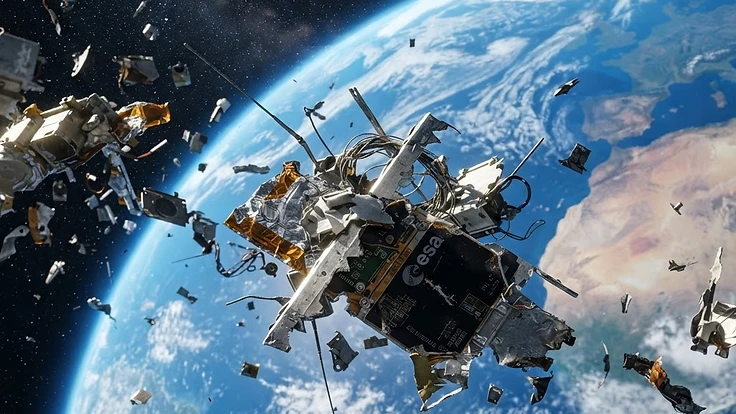
Earth orbit has become crowded with spent rocket stages, defunct satellites, and millions of tiny fragments of metal and plastic. This accumulation of space debris threatens the future of space exploration and our reliance on orbital technology. While nations and private companies continue to launch assets into space, the question of who carries the burden of cleaning this environment remains complex.
International treaties establish a basic legal framework, but they lack clear enforcement mechanisms for clearing derelict objects. Space debris is often labelled the ultimate commons problem because individual actors benefit from orbital access without shouldering the full cost of keeping that space usable. Addressing this requires a shift in how we define stewardship beyond national boundaries.
The Science of Orbital Decay
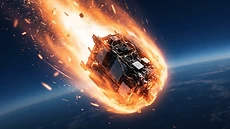
Objects in low Earth orbit maintain their position through a balance of velocity and gravity. At altitudes near the ISS, roughly 408 kilometres above the surface, atmospheric drag naturally slows objects over time. This leads to orbital decay, where the object eventually re-enters the denser layers of the atmosphere and burns up.
Objects in higher orbits stay for decades or even centuries. Every collision creates thousands of new pieces of shrapnel, a cascading phenomenon often described as the Kessler Syndrome and the Future of Earth Orbit. This creates a cycle where existing debris makes the environment increasingly dangerous for active satellites.
Real World Implications for Technology
Modern life depends on satellites for global positioning, telecommunications, and monitoring environmental changes. A single major collision could disable a crucial network, causing widespread disruption to financial markets and emergency services. We must ensure that the International Responsibility for the Management of Orbital Debris evolves to protect these essential services.
Technological failures due to debris impacts can also lead to misinterpretations of space weather events. When satellites fail, operators must distinguish between collision damage and the impacts of geomagnetic storms, which are measured using the [K-index](/ #kp) to assess current solar activity. Reliability in space requires both debris mitigation and robust Monitoring Solar Storms to Protect Satellite Infrastructure.
How You Can Contribute
Public awareness is the first step toward policy change. By staying informed about the orbital environment, you can better understand the risks and advocate for sustainable space practices. If you operate your own website or research hub, you can use our embeddable widgets to display real-time space data to your audience, fostering a broader culture of transparency.
Staying up to date with orbital conditions and space weather trends helps contextualise the challenges faced by space agencies. For those interested in the broader cosmos, you might find our glossary useful for deconstructing technical jargon. Engaging with scientific data transforms space from a distant concept into a tangible, shared environment we must protect.
Key Takeaways
Cleaning up orbital space is not the responsibility of a single nation but a collective necessity for all spacefaring entities. We need to move from passive monitoring to active debris removal technologies while updating international regulations to ensure accountability. Protecting our orbital highways ensures that the next generation can continue to explore, observe, and utilise the space surrounding our planet safely.
As we manage our technological presence in space, we must remember that orbit is finite. Sustainability is the only path forward for a civilisation that relies on the stars. By prioritising orbital health today, we secure the tools that define our modern era.
People Also Ask
Can space debris fall to Earth and hit people?+
Most debris burns up completely upon atmospheric re-entry. Only the largest or most robust components, such as titanium tanks, reach the surface. The probability of debris hitting a person is statistically extremely low, as most re-entries occur over remote areas or deep oceans.
How do we currently remove space debris?+
Current methods include active debris removal missions, such as nets, harpoons, or robotic arms designed to capture dead satellites. Additionally, many operators now perform end-of-life disposal, where satellites are moved into a graveyard orbit or forced to re-enter the atmosphere to burn up safely.
Who owns space debris?+
Under international law, the state that launched the object retains jurisdiction and ownership of it forever. This legal principle makes it difficult for other nations or private companies to remove debris without explicit permission from the original launching state, complicating cleanup efforts.
Continue Reading
Forecast These Questions
View all →Express your probability on these active forecast questions.