Sunspots and Solar Flares: The Engine of Space Weather
Sunspots serve as the primary nurseries for solar flares, acting as intense magnetic anchors that fuel explosive releases of energy across the solar system.
Sunspots and Solar Flares: The Engine of Space Weather
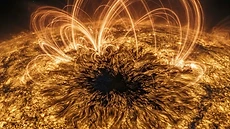
The surface of the Sun is far from a uniform, tranquil sphere. It is a roiling, magnetised environment that frequently produces sunspots, which are regions of concentrated magnetic activity. These dark blemishes on the solar photosphere act as the direct precursors to solar flares, the powerful bursts of radiation that define our local space weather environment.
Live Space Weather Dashboard
Powered by Flarient — embed this on your site →
Understanding the relationship between these spots and flares is essential for anyone interested in space weather. As Solar Cycle 25 continues its march toward a peak, observing these magnetic features offers a window into the inner workings of our star. Recognising how these events trigger geomagnetic storm activity can help you better interpret the cosmic influences on our technological world.
The Science Behind It
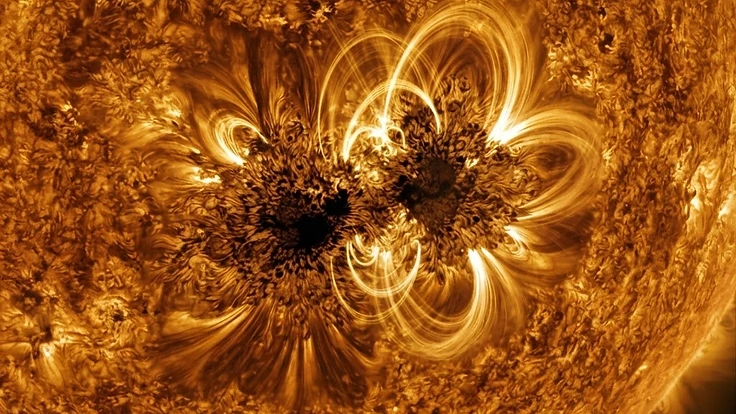
Sunspots appear dark because their intense magnetic fields prevent the normal convective flow of hot plasma from the interior to the surface. This magnetic flux creates a localised cooling effect, allowing the area to dim relative to the surrounding photosphere. These regions are rarely simple or isolated.
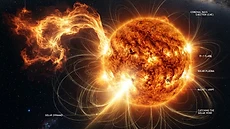
As the Sun rotates and its magnetic fields become twisted and knotted, these sunspot groups store massive amounts of energy. When the magnetic field lines become overly complex, they may undergo a process called magnetic reconnection. This event releases stored energy instantaneously in the form of a solar flare.
The resulting eruption releases high-energy photons across the entire electromagnetic spectrum, from radio waves to X-rays. While flares themselves travel at the speed of light, they are often accompanied by coronal mass ejections that carry plasma outward. Studying these magnetic landscapes through detailed solar imagery helps scientists model the probability of an energetic event before it occurs.
Real-World Implications
When a significant solar flare impacts the Earth, the immediate consequence is an ionisation of our upper atmosphere. This can disrupt high-frequency radio communications and degrade satellite signals. As discussed in Solar Flares Can Induce Power Outages on Earth, the resulting geomagnetic disturbances can affect ground-based power grids.
Technological infrastructure remains vulnerable to these invisible pulses of energy. Astronauts aboard the ISS, which orbits at approximately 408 kilometres above our planet, face increased radiation risks during large solar particle events. Airlines flying near polar routes may also reroute flights to avoid signal loss caused by atmospheric changes.
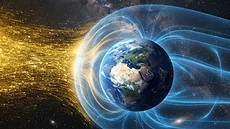
Beyond technical concerns, these events drive the spectacular aurora displays that light up the night sky. The interaction between solar wind and our magnetosphere causes particles to spiral towards the poles, creating a dance of light. While beautiful, these displays are the visual manifestation of a planet shielding itself from solar activity.
What You Can Do
Staying informed about solar activity is easier than ever with modern digital tools. By checking a [local aurora forecast](/#local), you can determine if a solar event will be visible from your specific coordinates. If you are planning to travel for the lights, consider booking guided aurora tours in destinations like Iceland, Sweden, Norway, or Alaska to gain expert insights into the science behind the spectacle.
For those managing technical projects or interested in amateur radio, keeping an eye on current flare activity is vital. You can utilise embeddable widgets on your personal websites or dashboards to keep a constant pulse on the Sun. Tracking the storm leaderboard allows you to compare current activity with historical events, placing today's observations into a broader scientific context.
Key Takeaways
Sunspots are not merely superficial marks on the Sun, but active hubs of magnetic potential. Their complexity serves as a primary indicator for the likelihood of solar flares, which remain the most explosive events in our solar system. By monitoring these regions, we can better anticipate the space weather that shapes our environment.
While we cannot stop the Sun from flaring, our ability to predict and prepare for these events has improved significantly. Whether you are chasing the northern lights or protecting delicate electronics, understanding the Sun is the first step toward resilience. Explore our glossary to learn more about the terminology used to track these solar cycles.
For observers
If sunspots spark your curiosity, one accessible route to seeing them yourself is a compact solar imaging setup for white light photos of the photosphere with proper solar filters. See one way to get started at Explore an observation setup.
Ad · Affiliate link. Flarient may earn a commission if you purchase through this link, at no additional cost to you.
People Also Ask
Can solar flares cause damage to electronics on Earth?+
Yes, intense solar flares can cause geomagnetic induced currents in power grids, potentially leading to transformer damage. They also disrupt satellite electronics and high-frequency radio communications by ionising the Earth's upper atmosphere, which interferes with signal propagation for global navigation and communication systems.
How do we classify the strength of solar flares?+
Solar flares are categorised by their X-ray output into five classes: A, B, C, M, and X. Each letter represents a ten-fold increase in intensity. X-class flares are the most powerful, capable of causing planet-wide radio blackouts and long-lasting radiation storms in the upper atmosphere.
Do sunspots follow a specific cycle?+
Yes, sunspots follow a cycle of approximately 11 years. This cycle involves a transition from solar minimum, where sunspots are rare, to solar maximum, where they appear frequently. Solar Cycle 25 officially began in December 2019 and continues to show varying levels of magnetic activity.
Continue Reading
Forecast These Questions
View all →Express your probability on these active forecast questions.