The Celestial Construction of Asteroids
Asteroids are more than just space rocks; they are the leftovers of our solar system's creation. Understanding how these primitive bodies form provides vital clues about the origins of the planets.
The Origins of Asteroids
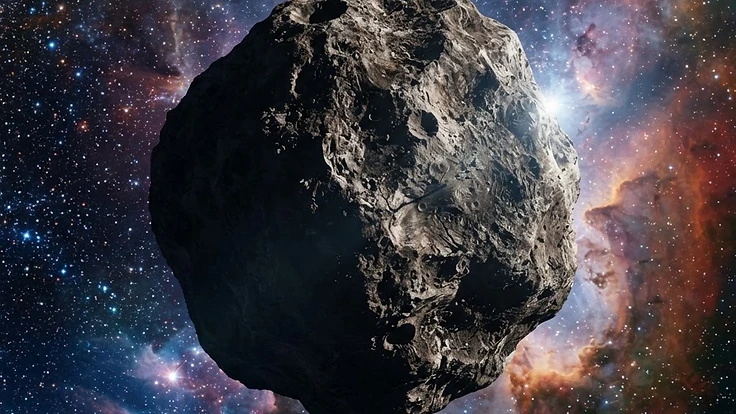
Asteroids are the remnants of the early solar system, dating back roughly 4.6 billion years. When the sun formed, a vast disc of gas and dust surrounded it, providing the raw materials for planets to emerge.
Near-Earth Asteroid Watch
Powered by Flarient — embed this on your site →
Most material in this disc aggregated into the planets we know today. However, some remained in the gaps between these worlds, never quite forming a full planet.
The Science Behind It
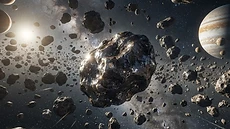
In the region between Mars and Jupiter, the strong gravitational influence of the gas giant prevented these fragments from accreting into a single object. This primary belt serves as a repository for planetesimals, the building blocks that failed to become part of a larger planetary body.
These objects vary in composition based on their distance from the sun. Near the inner edge of the belt, high temperatures resulted in rocky asteroids, while further out, cooler temperatures allowed icy and carbon-rich material to persist.
Collisions define the lifecycle of these bodies, often shattering them into smaller fragments. Through the process of accretion and fragmentation, we see a constant evolution of their shapes and sizes, an ongoing cycle that NASA researchers analyse to better map our cosmic history.
Real-World Implications
While the vast majority of these objects reside peacefully in the main belt, some migrate into a near-Earth asteroid orbit. Monitoring their trajectories is essential for planetary defence, as collisions have shaped the history of Earth itself.
Events like the Chicxulub impact demonstrate the devastating potential of a 10 kilometre wide object striking our planet. Tracking these NEO objects helps scientists assess potential risks with high precision.
Beyond safety, these bodies offer a wealth of raw materials. Exploring their potential for mining remains a subject of intense scientific interest, as detailed in our analysis of the technical feasibility of mining asteroids.
What You Can Do
Staying informed about near-Earth objects is easier than ever for the casual observer. You can utilise our live tracking tools to view current orbital data and learn about the formal process of naming asteroids at our glossary.
If you represent an educational institution or run a science-focused website, you can use our embeddable widgets to display real-time tracking data for your audience. Keeping an eye on the sky helps build a broader understanding of the dynamic environment surrounding our planet.
Key Takeaways
Asteroids serve as a time capsule for the solar system, containing information that is otherwise lost on larger, geologically active planets. By studying them, we gain insight into the conditions that allowed life to flourish on Earth.
We are constantly updating our database to help you track these celestial travellers. Whether you are a student or a researcher, engaging with the data allows you to contribute to a deeper understanding of our place in space. You can follow our more articles section to learn more about the forces shaping our cosmic neighbourhood.
For observers
If you would like to try observing or photographing asteroids, tracking their positions or light curves from a backyard or dark sky site, one compact option is Explore a compact capture setup.
Ad · Affiliate link. Flarient may earn a commission if you purchase through this link, at no additional cost to you.
People Also Ask
What is the difference between an asteroid and a meteor?+
An asteroid is a rocky body orbiting the sun, primarily found in the belt between Mars and Jupiter. A meteor is the streak of light produced when a piece of space debris, often a small fragment of an asteroid or comet, enters Earth's atmosphere and burns up.
Are all asteroids the same shape?+
No, asteroids come in many shapes. Small asteroids are often irregular or potato-shaped due to their low gravity. Larger asteroids can become spherical if they have enough mass for their own gravity to pull them into a round shape, similar to a planet.
How do scientists know what asteroids are made of?+
Scientists analyse the light reflected from asteroids using spectroscopy. By studying the light spectrum, they can identify the chemical composition of the surface, including minerals, metals, and water content. This data reveals whether the asteroid is primarily rocky, metallic, or carbonaceous in nature.
Continue Reading
Forecast These Questions
View all →Express your probability on these active forecast questions.