The Technical Feasibility of Mining Asteroids
Mining asteroids offers a pathway to harvesting rare materials in space, but the engineering hurdles remain immense. We examine the current science, logistical challenges, and the potential impact on future resource management.
The Technical Feasibility of Mining Asteroids
Mining asteroids is a concept that bridges the gap between science fiction and emerging industrial reality. While humanity has spent decades looking at these space rocks through a telescope, we are now entering an era where we must determine if they can provide the raw materials necessary for deep space travel. It is a question of logistics, energy, and orbital mechanics rather than just simple extraction.
Near-Earth Asteroid Watch
Powered by Flarient — embed this on your site →
As our demand for precious metals and water increases on Earth, the vast reserves orbiting in our solar system become a tempting target. Unlike terrestrial mining, where environmental regulation and geography limit access, space offers a sterile environment with immense supply potential. The transition from observation to active extraction is the next major step in our spacefaring evolution.
The Science Behind It
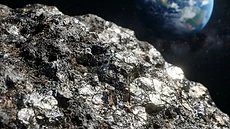
Asteroids are essentially the leftover building blocks of the solar system, containing a wide variety of minerals, metals, and volatile compounds. Many are rich in platinum group metals, while others hold significant amounts of water ice which can be processed into liquid hydrogen and oxygen for rocket fuel. Understanding the celestial construction of asteroids is vital for identifying which targets are worth the high cost of a mission.
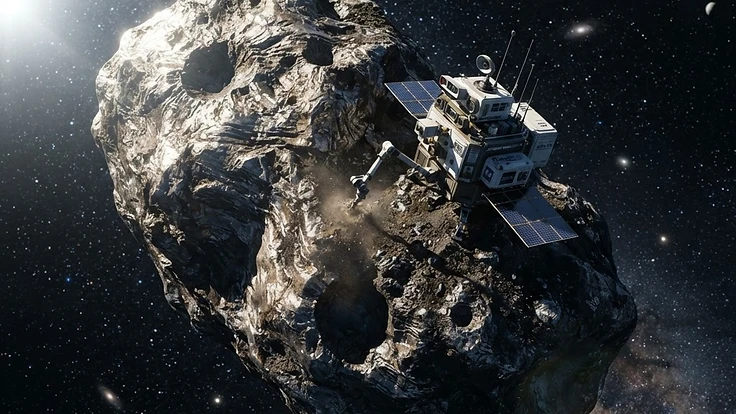
Extracting these resources requires precise navigation to a near-Earth asteroid and the capability to anchor a spacecraft to a rotating body. Since most asteroids have negligible gravity, traditional excavators would simply launch themselves into space upon contact. Engineers are currently modelling capture mechanisms that use nets, harpoons, or robotic arms to secure a craft during the drilling phase.
Real-World Implications
The industrialisation of space has the potential to reshape our economic reliance on terrestrial mines. If we can successfully process water ice in space, we can refuel satellites and spacecraft in orbit, effectively lowering the cost of every mission that leaves the atmosphere. This would reduce the reliance on expensive heavy-lift rockets departing from Earth, potentially turning orbit into a staging area for further exploration.
This shift also forces us to consider the legal and environmental implications of non-terrestrial mining. As we discuss in our look at the question of ownership in deep space, there is no current global consensus on who owns these resources. We must also consider the risks associated with nudging large bodies, ensuring that our search for profit does not create an accidental collision threat.
What You Can Do
You can keep track of incoming space threats by monitoring the latest data on orbital paths and potential encounters. Using a local aurora forecast can also help you understand how solar activity influences the environment where these spacecraft operate. Staying informed about space weather is a practical way to understand the volatile conditions that any future mining operation will face.
If you want to track the movement of bodies near our planet, you can use our embeddable widgets to integrate real-time tracking data into your own projects. We also encourage you to look at our glossary to brush up on the technical terminology used by researchers. Understanding these basics ensures you are prepared to follow the developments in this sector as they happen.
Rather trade the forecast screen for a front-row seat? [Guided aurora tours](https://vi.me/HuXHi) across the Arctic Circle — from Norway's Lofoten to Canada's Northwest Territories — handle the chase so you don't have to.
Key Takeaways
Mining asteroids remains a high-stakes engineering challenge, but the potential rewards for space infrastructure are too significant to ignore. While we are not yet at a stage of mass extraction, the groundwork is being laid through international cooperation and better observational tools. The path forward requires a balance of innovation, legal clarity, and robust safety protocols.
As we refine our ability to monitor these objects, our mastery over the space environment will only grow. Watching the skies is no longer just a hobby for astronomers, but a necessity for the next generation of space explorers. The future of mining will be dictated by how we manage these remote, icy, and metallic giants drifting in our own cosmic backyard.
People Also Ask
Which asteroids are the best candidates for mining?+
Carbonaceous asteroids are highly sought after because they contain water ice and organic compounds. These materials are essential for producing rocket propellant in space. Metallic asteroids, which are rich in iron, nickel, and cobalt, are also primary targets for harvesting industrial materials to be used in construction.
How do we land on an asteroid with no gravity?+
Landing is not quite the right term, as there is almost no gravity to hold a spacecraft down. Instead, mission operators use a technique called anchoring or docking. Spacecraft often use harpoons, robotic grippers, or net systems to firmly attach to the surface during the excavation process.
Is asteroid mining legal under international law?+
The 1967 Outer Space Treaty prohibits nations from claiming sovereignty over celestial bodies. However, there is ongoing debate regarding the extraction of resources. Some countries have passed domestic legislation that allows private companies to own and sell materials they extract from asteroids, though this remains a complex legal issue.
Continue Reading
Forecast These Questions
View all →Express your probability on these active forecast questions.