The Question of Ownership in Deep Space
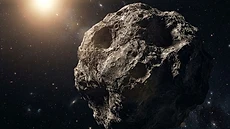
As commercial interest in space mining grows, the legal status of asteroids remains a complex puzzle. Who really holds the rights to these celestial bodies?

Asteroids Remain Beyond Sovereign Claims
Space was once the exclusive domain of national governments and their respective space agencies. Today, private enterprises are turning their gaze toward the vast mineral wealth waiting in the cosmos, making the question of who owns asteroids increasingly urgent.
Near-Earth Asteroid Watch
Powered by Flarient — embed this on your site →
International treaties from the mid-twentieth century established that no nation can claim sovereignty over outer space. This framework presents a unique challenge for corporations hoping to extract resources from a near-Earth asteroid.
The Legal Landscape of the Heavens
The 1967 Outer Space Treaty stands as the cornerstone of space law. It dictates that celestial bodies are the province of all mankind, effectively preventing countries from planting flags to claim territory.
While this treaty limits national expansion, it is quieter on the rights of private companies. Some nations have begun to pass domestic laws that allow their citizens to own and sell materials extracted from space, creating a fascinating tension with international agreements.
This grey area invites ongoing debate among jurists and policymakers. For those interested in the tracking and characterisation of these bodies, Global Teams Track Near-Earth Asteroids provides a look at the international cooperation required to understand our orbital neighbourhood.
Scientific Realities of Mining
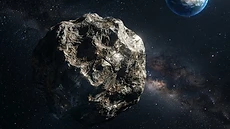
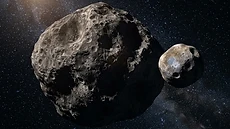
Asteroids are essentially the leftover rubble from the formation of our solar system. Many of these [near-Earth asteroid](/ #asteroids) objects contain water ice, platinum, and other rare metals that could sustain future deep space missions.
Extracting these resources is a massive engineering challenge that requires precise navigation and robotics. Understanding the celestial construction of asteroids is essential for any organisation hoping to anchor equipment or process raw materials in microgravity.
Technological advancement is currently focused on long-term sustainability rather than immediate acquisition. The goal is often to fuel ships in orbit, reducing the need to carry heavy loads from Earth's deep gravity well.
Monitoring Our Changing Space Environment
Understanding the space environment is not just about mining but also about planetary defence. Space weather, driven by solar activity, can disrupt the very communication networks that would manage remote mining operations.
Operators must monitor the [Kp](/ #kp) index and other indicators to ensure that sensitive electronics remain safe during high-energy events. Maintaining a pulse on solar conditions is a prerequisite for any permanent infrastructure outside our atmosphere.
If you want to track how these events impact our technological backbone, you can explore the glossary for key terms or look through our archive of historical geomagnetic disturbances. Staying informed is the best way to grasp how we manage risks in a dynamic and often unpredictable orbital environment.
Looking Toward a Shared Future
Ownership in space will likely be defined by usage rights rather than land possession. As we venture further, we must balance the spirit of discovery with the need for ethical resource management.
Cooperation will remain the most efficient way to navigate the legal and scientific complexities ahead. Our collective future depends on how well we organise our approach to these floating treasures while respecting the international frameworks that keep the peace in orbit.
From policy to sky
If the debate over asteroid ownership makes you curious to see these bodies yourself, one accessible route is to try observing or photographing near Earth asteroids. One compact option to consider is See an accessible way to capture the sky.
Ad · Affiliate link. Flarient may earn a commission if you purchase through this link, at no additional cost to you.
Continue Reading
Forecast These Questions
View all →Express your probability on these active forecast questions.
Will a near-Earth object pass within 1 Lunar Distance this quarter?
35%
Community
Will a near-Earth object pass within 1 Lunar Distance this quarter?
35%
Community
Will a newly discovered asteroid larger than 10m pass within 5 LD this month?
35%
Community
Will a near-Earth object pass within 5 Lunar Distances this month?
45%
Community