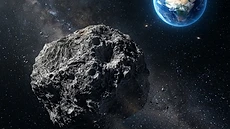
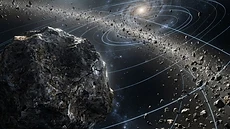
The Formation and Evolution of Asteroids
Asteroids are the building blocks of our solar system, remnants from a violent and chaotic past. Understanding their formation reveals how planets are made and what risks they pose to Earth today.
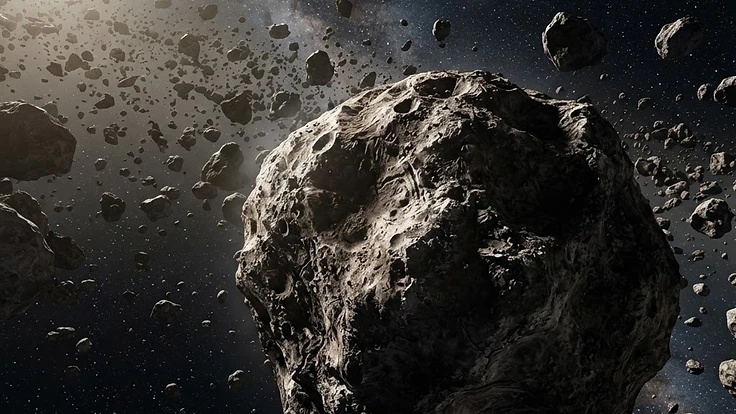
The Formation and Evolution of Asteroids
Asteroids are essentially the planetary debris left over from the formation of the solar system about 4.6 billion years ago. These rocky bodies represent the building materials that never managed to coalesce into a full sized planet.
Near-Earth Asteroid Watch
Powered by Flarient — embed this on your site →
While planets grew through accretion in the early solar nebula, asteroids remained as smaller, fragmented remnants. They offer a unique window into the primitive materials and processes that shaped our cosmic neighbourhood.
The Science Behind It
Most asteroids formed in the solar nebula, a massive spinning disk of gas and dust. Gravity pulled these particles together into larger bodies through a process called accretion.
In regions where temperatures were higher, closer to the Sun, metallic and rocky materials formed. Further out, volatile compounds like water ice could solidify, leading to the creation of different asteroid compositions.
Collisions played a critical role in shaping these objects over billions of years. When large protoplanets formed, the gravitational tug of Jupiter prevented a planet from forming between Mars and Jupiter.
This gravitational interference kept the debris in a chaotic state, causing frequent impacts that shattered larger bodies into fragments. The resulting near-Earth asteroid population remains a subject of intense scientific study today.
Scientists classify asteroids based on their composition and surface characteristics using data from NASA.
These fragments range from simple rocky piles to complex, mineral rich bodies that have undergone heating and melting.
Real-World Implications
Studying asteroids is vital for planetary defence and understanding the history of Earth. Large impacts, like the one associated with the Chicxulub impact and the dinosaur extinction, demonstrate the devastating potential of these objects.
While most asteroids pose no immediate threat, monitoring their orbits allows us to calculate the probability of any close approach. Continuous surveillance is necessary to ensure we have early warning systems in place.
Beyond the danger, asteroids are targets for future resource exploration. They contain valuable metals and water that could support long-term space travel and infrastructure development.
What You Can Do
Staying informed about the objects in our vicinity is simpler than ever. By accessing a near-Earth asteroid database, you can view real-time tracking data and learn about current research initiatives.
Engaging with citizen science projects or using professional tools helps you better understand the dynamics of our solar system. You can also explore our archive to review past orbital data and historical observations.
Learning about space safety prepares you for the realities of our cosmic environment. It transforms an abstract concept into a manageable understanding of our place in space.
Key Takeaways
Asteroids are the pristine fossils of the early solar system. They formed from the raw materials left behind during the birth of our Sun and planets.
Though they are often viewed as simple rocks, they have complex histories marked by collisions and gravitational interactions. Monitoring them is essential for both scientific discovery and Earth safety.
By tracking these bodies, we gain insights into our origins and our future. They continue to shape the narrative of our solar system, reminding us of the dynamic nature of space.
People Also Ask
What is the difference between an asteroid and a meteor?+
An asteroid is a rocky body orbiting the Sun, typically found in the main belt between Mars and Jupiter. A meteor is the streak of light produced when a fragment of an asteroid or comet enters Earth's atmosphere and burns up due to friction.
Can we deflect an asteroid if it heads toward Earth?+
Yes, scientists are developing planetary defence strategies such as kinetic impactors, which involve crashing a spacecraft into an asteroid to change its velocity. The success of missions like DART demonstrates that we can effectively alter the trajectory of a near-Earth object.
Are all asteroids made of the same material?+
No, asteroids are classified into several types based on their composition. C-type asteroids are carbon-rich and common in the outer belt, while S-type asteroids are made mostly of silicate rocks and metals. M-type asteroids are primarily composed of nickel and iron.
Continue Reading
Forecast These Questions
View all →Express your probability on these active forecast questions.
Will a near-Earth object pass within 1 Lunar Distance this quarter?
35%
Community
Will a near-Earth object pass within 1 Lunar Distance this quarter?
35%
Community
Will a newly discovered asteroid larger than 10m pass within 5 LD this month?
35%
Community
Will a near-Earth object pass within 5 Lunar Distances this month?
45%
Community