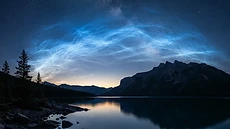
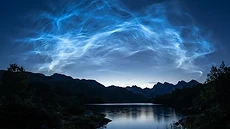
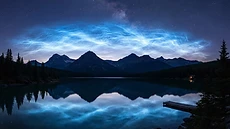
The Ghostly Glow: Understanding Noctilucent Clouds
Often mistaken for distant weather, noctilucent clouds are ethereal displays occurring at the edge of space. Discover what creates these electric-blue phenomena and how you can spot them yourself.
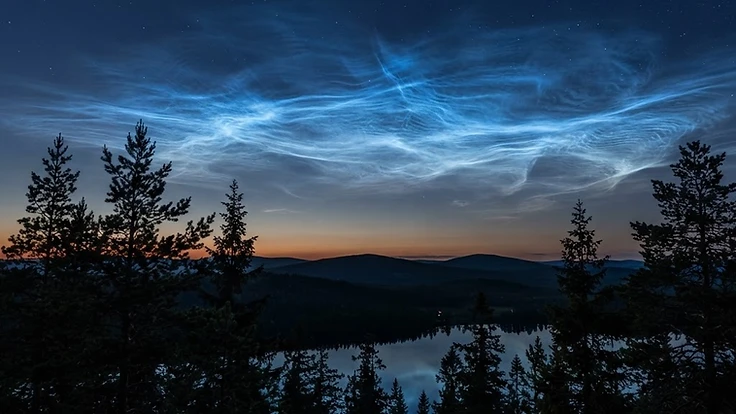
Noctilucent Clouds Define The Edge Of The Sky
High above the bustling weather of the troposphere, a peculiar phenomenon occasionally haunts the twilight sky. Noctilucent clouds, or night-shining clouds, appear as delicate, electric-blue ribbons that shimmer long after the sun has dipped below the horizon.
These clouds are not your typical meteorological formations. They exist in the mesosphere, approximately 80 kilometres above the surface, placing them well beyond the reach of standard aircraft and conventional storm systems. We explore their unique formation in The Cosmic Origins of Noctilucent Clouds to better understand our connection to the upper atmosphere.
The Science Behind It
Noctilucent clouds require a very specific set of conditions to manifest. They are composed of tiny ice crystals that form around meteoric dust particles suspended in the extremely cold mesopause.
Because they sit at such a high altitude, they remain illuminated by sunlight even when the ground is plunged into darkness. This creates the signature glow that makes them visible against the backdrop of the night sky.
They appear most frequently during the summer months in the northern and southern hemispheres. As the lower atmosphere warms, the upper atmosphere paradoxically cools, allowing these delicate ice structures to thrive.
For those curious about the terminology used to describe such high-altitude phenomena, you can browse our glossary for more technical details. It provides clarity on how these layers interact with the broader space environment.
Real-World Implications
While noctilucent clouds are primarily a visual marvel, they serve as a sensitive barometer for the state of our atmosphere. Their increasing frequency and changing patterns are often cited by scientists as indicators of shifting climatic conditions.
These clouds also share the sky with other energetic events. While they are distinct from the aurora, both are visible in high-latitude regions and rely on complex atmospheric interactions.
Studying these clouds helps researchers refine their modelling of the upper atmosphere. This is vital for understanding how satellites navigate the thin, outer layers of our air where drag becomes a significant factor. For more on how the atmosphere affects orbital mechanics, see our article on Satellite Reentry and the Physics of Orbital Decay.
What You Can Do
Spotting these clouds requires a bit of patience and the right timing. Look towards the horizon during the deep twilight hours, typically between 30 and 60 degrees latitude, when the sun is between 6 and 16 degrees below the horizon.
If you want to track atmospheric conditions more closely, you can monitor live data streams via our dashboard. Keeping an eye on solar activity and atmospheric indicators can help you determine the best nights for sky watching.
For those who maintain their own weather or astronomy websites, our embeddable widgets are a perfect way to display real-time data to your visitors. They provide a seamless way to share space weather insights without needing deep technical knowledge.
If planning around Kp and cloud cover feels like work, guided aurora tours in Norway, Finland and Iceland remove the guesswork — a guide watches the data while you stay warm until it's time to move.
Key Takeaways
Noctilucent clouds remind us that our atmosphere is far more dynamic than it appears from the ground. These night-shining displays are a testament to the interplay between meteoric dust, extreme cold, and solar illumination.
Whether you are a casual stargazer or a dedicated observer, catching a glimpse of these clouds is a rewarding experience. Always ensure you have a clear view of the northern or southern horizon depending on your location.
We encourage you to document your observations and compare them with our archive of past events. Understanding the patterns of our sky helps us appreciate the delicate balance of the environment we inhabit.
Continue Reading
Forecast These Questions
View all →Express your probability on these active forecast questions.