The History and Science of Earth Asteroid Impacts
Asteroids have shaped our planet throughout its history. Understanding how these near-Earth objects interact with Earth is essential for modern planetary defence.
The History and Science of Earth Asteroid Impacts
Earth has spent billions of years travelling through a crowded solar system. Every impact, from small stones to civilisation-altering rocks, tells a story about our place in the cosmos. Scientists use the glossary to classify these space rocks as we continue to track their paths.
Near-Earth Asteroid Watch
Powered by Flarient — embed this on your site →
Studying these events helps us understand the hazards posed by any near-Earth asteroid that might cross our orbit. While most objects burn up in our atmosphere, the rare large encounter reminds us that space is active. It is important to view these encounters as part of the natural evolution of our planet rather than purely a source of fear.
The Science Behind It
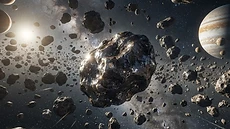
Asteroids are rocky remnants from the formation of our solar system. Most reside in the belt between Mars and Jupiter, but gravitational nudges can send them into orbits that intersect with Earth. These objects are labelled as near-Earth objects when their paths bring them into our local neighbourhood.
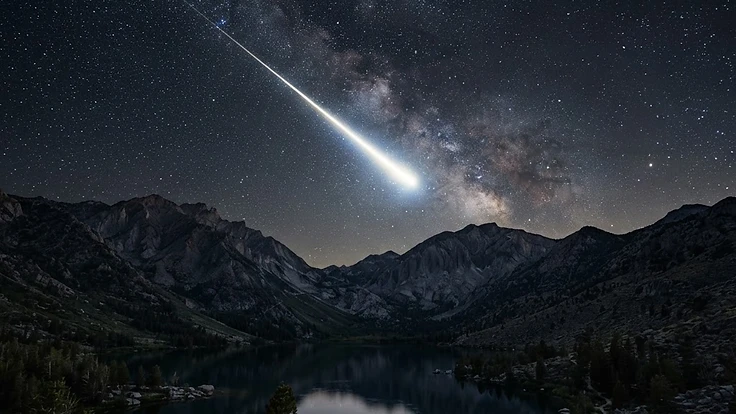
When an object enters our atmosphere, friction with gas molecules creates extreme heat. This is what we see as a meteor, or shooting star. Most small asteroids disintegrate long before reaching the ground.
Larger bodies, however, require massive energy to vaporise completely.
Researching the mechanics of how asteroids reach Earth provides context for why some survive the trip. The kinetic energy released by an impact is a function of the mass and velocity of the asteroid. A ten kilometre wide asteroid, such as the one that struck Chicxulub 66 million years ago, releases energy comparable to millions of nuclear weapons.
Real-World Implications
Impacts are not just historical footnotes. Even smaller airbursts can cause significant local damage by creating shockwaves that shatter glass and damage infrastructure. This is why planetary scientists focus on identifying potential threats well before they reach our orbit.
Modern technology allows us to monitor the skies with unprecedented accuracy. By tracking these objects, organisations like NASA CNEOS help calculate potential trajectories years or decades in advance. This data allows for the modelling of future close approaches to ensure our long-term safety.
While space weather from the sun often dominates current conversations, asteroid tracking remains a pillar of global safety. Understanding these objects is critical for protecting the satellite infrastructure we rely on daily. Just as we monitor solar storms to preserve our power grids, we watch the skies for incoming rocks.
What You Can Do
Education is the first step in awareness. You can explore the archive of past events to see how frequently these objects pass by Earth. Engaging with scientific data helps distinguish between sensational headlines and actual risks.
If you are interested in the broader space environment, you might consider how other phenomena behave. You can track space weather using the Flarient dashboard, which provides live updates on geomagnetic conditions and other cosmic events. Being prepared means having access to reliable data about what is happening in the space surrounding our planet.
Many tools are available for those who want to learn more about our solar neighbourhood. You can even use embeddable widgets on your own site to display real-time data about objects currently being monitored. These tools turn abstract concepts into tangible information for anyone curious about our place in space.
Key Takeaways
Earth acts as a shield, protecting the surface from the vast majority of incoming space material. Most meteors seen in the night sky are harmless reminders of the debris that fills our system. Understanding the history of these impacts gives us a better grasp of the dynamic nature of our solar system.
Constant observation and international cooperation ensure that we are not caught off guard by potential visitors. As we continue to advance our detection capabilities, we grow better at predicting when a rock might come too close. Keep an eye on the sky and stay informed through reliable resources as we continue our journey around the sun.
People Also Ask
How often do asteroids hit Earth?+
Small asteroids, often no larger than a car, enter Earth's atmosphere almost daily, though most burn up completely. Larger impacts that cause significant damage are rare, occurring perhaps once every few centuries or even longer, depending on the size of the asteroid in question.
Are all near-Earth objects dangerous?+
No. A near-Earth object is simply classified as such if its orbit brings it within a certain distance of Earth. The vast majority of these objects pose no risk of impact and are studied primarily to understand the composition and history of our solar system.
How do scientists detect asteroids?+
Astronomers use ground-based telescopes and space-based observatories to scan the sky for moving points of light. By observing these objects over multiple nights, researchers can calculate their orbital paths and determine if they will make a close approach to Earth in the future.
Continue Reading
Forecast These Questions
View all →Express your probability on these active forecast questions.