The Reality of Asteroid Impacts on Earth
Asteroids remain a fundamental part of our solar system's history, but how much danger do they actually pose to modern civilisation? We analyse the science of orbital threats.
The Reality of Asteroid Impacts on Earth
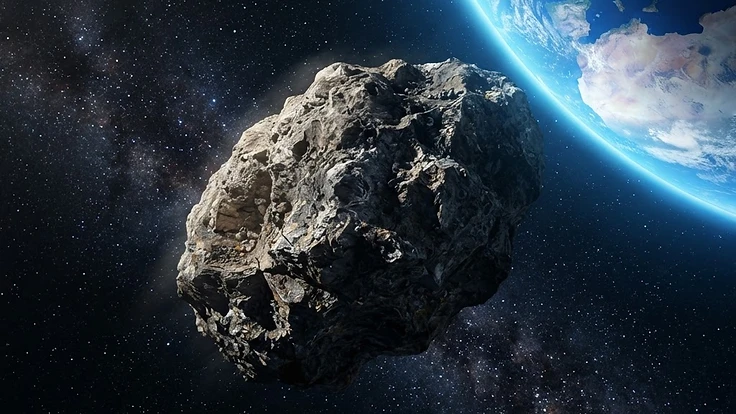
Space is not a void, but a dynamic environment filled with objects of all sizes. Among these, the near-Earth asteroid population commands particular attention from astronomers and planetary defence experts alike.
Near-Earth Asteroid Watch
Powered by Flarient — embed this on your site →
While the prospect of a catastrophic impact features heavily in science fiction, the scientific community maintains a balanced view of these cosmic travellers. Understanding their movement and probability of collision is an ongoing task for scientists globally.
The Science Behind It
Asteroids are essentially the leftover building blocks from the formation of our solar system. Most reside in the main belt between Mars and Jupiter, but gravitational interactions can nudge some into orbits that cross our path.
These bodies vary wildly in size, composition, and velocity. A rock just a few metres across may disintegrate harmlessly in our upper atmosphere, creating a bright meteor rather than a ground impact.
Larger objects present a different challenge. The famous Chicxulub asteroid, estimated at 10 kilometres wide, struck Earth 66 million years ago and fundamentally altered the climate and biological trajectory of the planet.
Scientists utilise advanced tracking networks to monitor the orbits of these objects. By calculating the path of a near-Earth asteroid, researchers determine if a close approach is likely to result in an intersection with our orbit.
Real-World Implications
Monitoring these objects is essential for long-term safety. While the risk of a civilisation-ending event is statistically very low on a human timescale, smaller impacts can cause localised damage or atmospheric shockwaves.
Our modern reliance on orbital infrastructure adds a layer of complexity to this issue. As explored in our analysis of the mechanics and consequences of orbital satellite collisions, even small debris or objects can disrupt critical communication and navigation systems.
Space agencies around the world maintain a constant vigil to identify potential threats years or decades in advance. This lead time is our most effective tool for planetary defence, allowing for the modelling of potential mitigation strategies.
What You Can Do
Public interest in space safety helps drive the funding and support necessary for comprehensive monitoring programmes. You can deepen your understanding by referencing a standard glossary to differentiate between comets, meteors, and asteroids.
Flarient offers a live dashboard that provides clear visualisations for those who wish to track space activity. Engaging with these tools helps ground your perspective in actual, peer-reviewed data rather than alarmist headlines.
You might also find it useful to review our archive of past events to see how previous celestial visitors have been tracked. Staying informed about the broader context of space hazards is the best way to maintain a realistic view of our place in the solar system.
Key Takeaways
Asteroids are a natural part of our solar system, and while they require monitoring, they should not be a source of daily anxiety. Scientific collaboration and constant observation provide the best security for our planet.
We must continue to support efforts to track, analyse, and prepare for any potential close approaches. By remaining curious and informed, we contribute to a culture of scientific literacy that serves us all. Please visit our blog for more articles on the fascinating mechanics of our universe.
People Also Ask
How often do dangerous asteroids hit Earth?+
Small asteroids hit Earth's atmosphere quite frequently, resulting in harmless meteors. Larger, city-level threats occur once every few centuries, while civilization-level impacts are extremely rare, happening on timescales of millions of years. NASA actively tracks these objects to ensure no unexpected threats emerge.
What is planetary defence?+
Planetary defence is the multidisciplinary effort to detect, track, and potentially deflect near-Earth objects that pose an impact threat. It involves international collaboration between space agencies, using telescopes and radar to map trajectories and plan mitigation missions if a hazardous object is identified.
How do scientists track asteroids?+
Scientists track asteroids using ground-based and space-based telescopes to measure their position over time. By observing these objects consistently, researchers can calculate their orbits with high precision. This data is fed into systems like NASA's CNEOS to predict future close approaches and impact probabilities.
Continue Reading
Forecast These Questions
View all →Express your probability on these active forecast questions.
Will a near-Earth object pass within 1 Lunar Distance this quarter?
35%
Community
Will a newly discovered asteroid larger than 10m pass within 5 LD this month?
5%
Community
Will a near-Earth object pass within 1 Lunar Distance this quarter?
35%
Community
Will a near-Earth object pass within 5 Lunar Distances this month?
5%
Community