The Reality of Predicting Solar Flares
Solar flares are powerful eruptions from the sun, but can we actually predict them? Understanding the cycle and current observation methods reveals the truth about space weather forecasting.
The Reality of Predicting Solar Flares
Solar flares remain one of the most dynamic phenomena in our local space environment. As bursts of intense electromagnetic radiation originating from the sun, they have the potential to influence technology far beyond our atmosphere.
Live Solar Flare Monitor
Powered by Flarient — embed this on your site →
While science has advanced significantly, the question of whether we can predict these events with absolute certainty remains a subject of ongoing research. We track solar activity using the roughly 11-year solar cycle, which helps us understand periods of high and low activity.
The Science Behind It
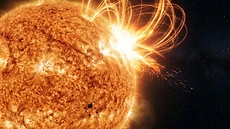
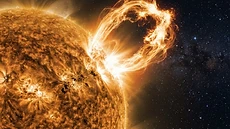
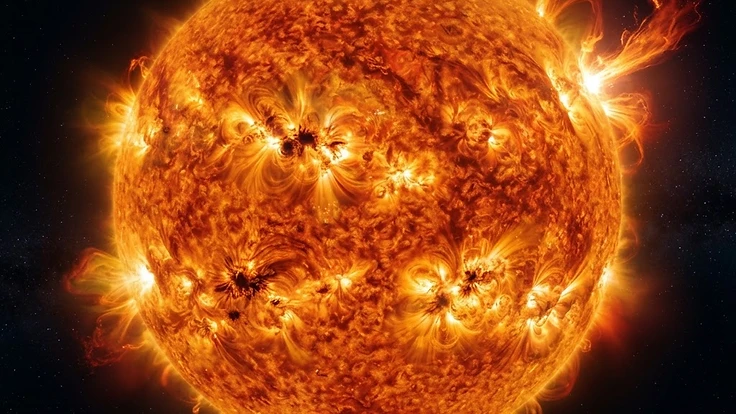
Solar flares are caused by the sudden release of magnetic energy stored in the suns atmosphere, often near sunspots. These complex magnetic field structures can snap and reconnect, accelerating particles to near the speed of light.
Because light travels at roughly 300,000 kilometres per second, the radiation from a flare reaches Earth in approximately eight minutes. This makes it impossible to provide early warning for the light itself, though we can monitor the source regions.
Scientists use solar imagery from orbiting observatories like the SDO to observe the build-up of magnetic complexity on the solar surface. While this allows for probabilistic forecasting, determining the exact second of a flare eruption is currently beyond our reach.
Real-World Implications
When high-energy radiation hits our atmosphere, it can ionise the upper layers, which disrupts high-frequency radio communications. This is a critical factor in [mastering the science of HF radio propagation](/blog/mastering-the-science-of-hf-radio-propagation) for aviation and maritime industries.
Beyond communications, these events are distinct from Coronal Mass Ejections, which carry actual plasma toward Earth. Understanding the distinction between solar flares and coronal mass ejections is vital for power grid operators and satellite controllers.
Extreme events can lead to significant geomagnetic storms, measured by the G-scale. In the most severe cases, this affects everything from satellite drag at the altitude of the ISS to the stability of ground-based electrical infrastructure.
What You Can Do
Staying informed is the best defence against the unexpected effects of space weather. Tools like embeddable widgets provide a simple way to track current activity levels without needing a degree in astrophysics.
If you are interested in seeing the results of solar activity firsthand, you can observe the aurora when conditions are favourable. We recommend checking guided aurora tours in countries like Iceland, Norway, Canada, and Alaska, where professional guides can help you navigate the best viewing opportunities.
Consulting a glossary for key terms helps bridge the gap between complex research and everyday understanding. Keeping tabs on the archive of past events also gives you a better sense of how solar cycles vary in intensity over time.
Key Takeaways
Predicting solar flares is a game of probability rather than clockwork precision. We can identify active regions on the sun that are likely to produce flares, but the precise timing remains elusive.
Focusing on the broader solar cycle and its influence on our planet provides better context for why these events matter. By relying on robust data and monitoring tools, we can prepare for the impacts on our modern technological landscape.
Space weather will always be a part of our solar system, but it is manageable. With the right information, we can appreciate the beauty of the sun while keeping our critical systems running smoothly.
For observers
For readers curious to try solar imaging or to observe sunspots yourself, one accessible route is a compact portable capture kit; Explore an observation setup.
Ad · Affiliate link. Flarient may earn a commission if you purchase through this link, at no additional cost to you.
People Also Ask
How often do solar flares occur?+
Solar flare frequency changes with the 11-year solar cycle. During a solar maximum, several flares can occur daily. During a solar minimum, they are much less frequent. Activity levels are tied to the number of sunspots present on the solar surface at any given time.
Can solar flares cause blackouts?+
Yes, extreme solar flares accompanied by Coronal Mass Ejections can induce currents in long-distance electrical transmission lines. While rare, these geomagnetic disturbances can overload transformers and potentially trigger regional power grid blackouts by disrupting the stable flow of electricity.
What is the difference between a solar flare and a CME?+
A solar flare is a burst of intense light and radiation that reaches Earth in minutes. A Coronal Mass Ejection is a massive cloud of solar plasma and magnetic fields that travels much slower, taking one to three days to arrive and potentially causing geomagnetic storms.
Continue Reading
Forecast These Questions
View all →Express your probability on these active forecast questions.