The Vast Silence of Intergalactic Space
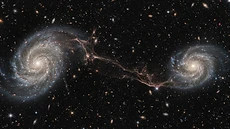
Intergalactic space is not a featureless void but a complex, ultra-thin environment connecting galaxies. Understanding this realm provides context for our position in the universe.
Intergalactic Space Is the Foundation of Cosmic Structure
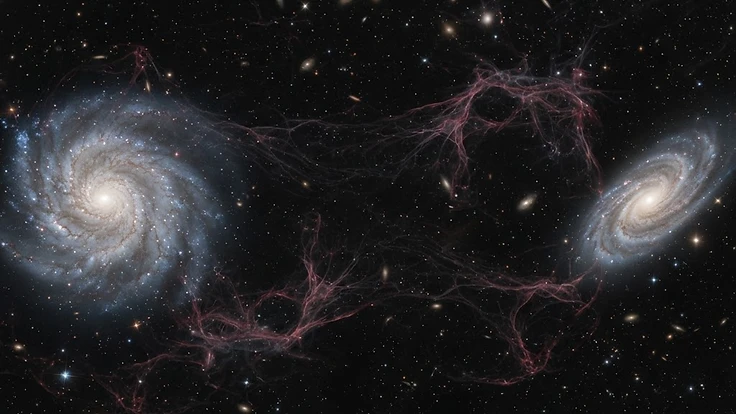
When we look at the night sky, our eyes are drawn to the bright beacons of stars and the swirling discs of galaxies. Beyond these luminous structures lies intergalactic space, the immense volume that occupies the vast distances between galaxy clusters. It is easy to view this region as a perfect vacuum, but that perspective misses the reality of the cosmos.
Intergalactic space serves as the connective tissue of the universe. While it contains far less matter than the space within a galaxy, it remains a critical environment for understanding how cosmic structures evolve over billions of years. By studying this expanse, scientists gain insights into the dark matter and gas that shape the larger universe.
The Science of Cosmic Voids
Intergalactic space is defined by its extreme scarcity of matter. In the densest parts of our galaxy, you might find several particles per cubic centimetre. Conversely, intergalactic space may contain only one atom in a space as large as a cubic metre.
Most of this matter is not made of stars or planets but consists of diffuse hydrogen gas. This gas, often heated to millions of degrees, forms the Warm Hot Intergalactic Medium. While it remains invisible to the naked eye, it plays a role in the life cycle of galaxies as they feed on this surrounding material.
Real-World Implications of Cosmic Distance
While intergalactic space sits far beyond the reach of human travel, its nature influences how we observe the universe. Light travelling from distant galaxies must pass through this medium for billions of years before arriving at our telescopes. Because the medium is so thin, it allows us to see deep into the history of the universe without significant obstruction.
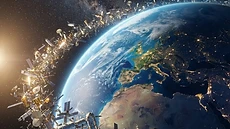
This vastness also reminds us of the fragility of our own planetary environment. We often focus on local space weather, such as a geomagnetic storm, to understand risks to our technology. Compared to the harsh, radiation-filled belts near Earth, intergalactic space is surprisingly calm, yet it reminds us that our local neighbourhood is a tiny island in a very large sea.
What You Can Do to Explore Space Weather
Understanding the scale of the universe often starts with observing the phenomena closer to home. If you are interested in how space conditions affect our planet, you can track current solar activity using the Flarient live dashboard. Monitoring the aurora conditions or studying the history of past events in our archive provides a grounded perspective on how space interacts with our atmosphere.
For those curious about the objects moving through our solar system, learning to distinguish between different types of space debris is a great start. Our article on distinguishing between asteroids and meteors offers a clear look at how to identify what you might see in the night sky. Keep an eye on our glossary to stay updated on the technical terms used by professional astronomers.
Prefer to let a professional read the sky? Guided Northern Lights tours in Alaska, Finland and the Faroe Islands combine real-time aurora tracking with decades of local viewing experience.
Key Takeaways of a Vast Universe
Intergalactic space is the ultimate example of cosmic scale. It is a region defined by its lack of density, yet it acts as the primary reservoir for the matter that builds galaxies. We live in a universe where the space between things is far larger than the things themselves.
Appreciating the emptiness of the cosmos helps us better value our own planet. As we continue to study the physics of the stars, we learn more about the structure of our own home. Looking into the void is, in many ways, the most effective way to understand the light.
People Also Ask
Does intergalactic space contain any matter?+
Yes, but in extremely low densities. Intergalactic space contains a very thin plasma of hydrogen and helium, along with dark matter. The density is often less than one atom per cubic metre, making it one of the most perfect natural vacuums in the known universe.
What is the difference between interstellar and intergalactic space?+
Interstellar space is the region located between stars within a single galaxy, such as our own Milky Way. Intergalactic space refers to the much larger regions of space located between different galaxy clusters or galaxies themselves, representing the vast gaps in the cosmic web.
Is intergalactic space truly empty?+
No region of the universe is entirely empty. Even in the deepest voids, there are photons of cosmic microwave background radiation, neutrinos, and the gravitational influence of dark matter. While it lacks solid matter like planets, it remains filled with energy and invisible physical forces.
Continue Reading
Forecast These Questions
View all →Express your probability on these active forecast questions.