
Identifying Artificial Satellites in the Night Sky
Learn how to spot orbiting satellites and differentiate them from stars, planets, and aircraft while exploring the basics of space observation.
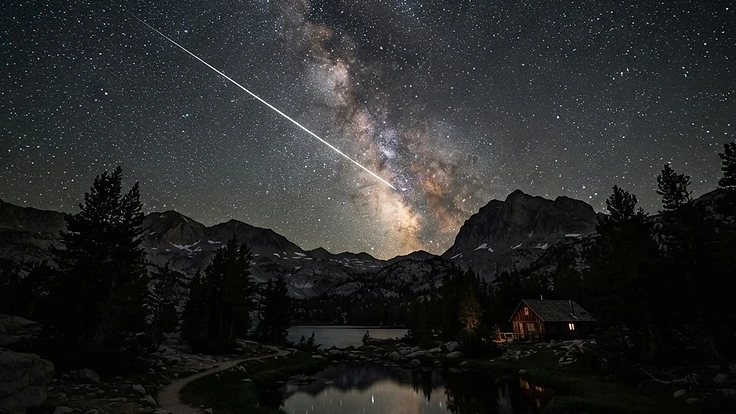
Identifying Artificial Satellites in the Night Sky
Stargazing often reveals moving points of light that defy the slow, predictable rotation of the celestial sphere. These are not wandering stars or distant aeroplanes, but artificial satellites orbiting our planet. As we continue to expand our presence in orbit, understanding how to identify these silent travellers becomes a rewarding skill for any observer of the night sky.
Observing these man-made objects provides a direct connection to the technology orbiting mere kilometres above our heads. Whether you are looking for the International Space Station or smaller commercial arrays, the principles of detection remain consistent and accessible to all.
The Science Behind It
Artificial satellites are visible because they reflect sunlight. They must be illuminated by the sun while the observer on the ground remains in the shadow of the Earth, which typically occurs shortly after sunset or just before sunrise.
Most satellites reside in Low Earth Orbit, which extends from the Kármán line at 100 kilometres up to about 2,000 kilometres. The International Space Station sits at a relatively stable altitude of approximately 408 kilometres, making it one of the brightest objects to track.
Because these objects travel at thousands of kilometres per hour, their movement across the sky is distinct. They do not blink like aircraft, which display specific navigation lights, nor do they twinkle like stars. They maintain a steady, constant glow as they glide across the constellations.
Real-World Implications
Satellite visibility acts as a bridge to understanding our reliance on space-based infrastructure. From global positioning and telecommunications to meteorological monitoring, the thousands of objects currently in orbit are essential for modern life.
Watching them pass overhead serves as a reminder of the busy environment in cislunar space. As described in our article on Cislunar Space Represents the New Frontier for Human Activity, this region is becoming increasingly crowded with both functional satellites and space debris.
Tracking these objects also helps enthusiasts understand the scale of our technological reach. You can learn more about the technical aspects of this tracking in our guide on The Mechanics of Real Time Satellite Tracking.
What You Can Do
To identify satellites, you must know their predicted paths, as they are not randomly distributed. Tools that provide live tracking data allow you to cross-reference the moving light you see with known orbital elements.
If you want to document your findings, consider the tips shared in our piece on Photographing Satellites and Starlink Trains. Using the right camera settings can turn a simple observation into a lasting record of your night under the stars.
You can also enhance your monitoring setup by using our embeddable widgets on your own website or dashboard. These tools provide real-time information without requiring you to manually calculate orbital passes for every object of interest.
Key Takeaways
Identifying satellites is a simple process of timing your observations to coincide with local twilight. By looking for non-twinkling, steady lights, you can distinguish artificial craft from the vast backdrop of natural stars.
Space observation is a continuous pursuit of knowledge. By staying informed about the objects in our sky, you gain a deeper appreciation for the satellites that sustain our global communications and navigation systems. Keep checking our more articles section to learn more about the complex environment above us.
People Also Ask
How can I tell the difference between a satellite and a star?+
Stars will twinkle due to atmospheric interference, whereas satellites usually appear as a steady, non-flashing light. Satellites also move at a constant speed across the sky, whereas stars remain fixed in their constellations, rotating only with the Earth's movement over the course of the night.
Why are satellites only visible at night?+
Satellites are only visible when they are illuminated by the sun while the observer on the ground is in darkness. This is why they are most easily seen during twilight hours, shortly after the sun has set or before it rises, when the object is still catching sunlight.
What is the fastest way to track a satellite?+
The most effective method is to use a satellite tracking application or website that inputs your specific GPS coordinates. These tools calculate the precise time and trajectory for visible passes based on your location, saving you from having to manually scan the entire sky.
Continue Reading
Forecast These Questions
View all →Express your probability on these active forecast questions.
Related Articles

Satellite Operators Use Advanced Strategies to Mitigate Space Weather Risks
2026-11-10 · 5 min read

Understanding the Mechanics of Sun-Synchronous Orbits
2026-10-16 · 5 min read

Tracking the International Space Station in Real Time
2026-10-02 · 5 min read