
Satellite Reentry and the Physics of Orbital Decay
Understanding how objects return to Earth from space. Learn the science of orbital decay and how scientists track the movement of satellites as they re-enter our atmosphere.
Satellite Reentry and the Physics of Orbital Decay
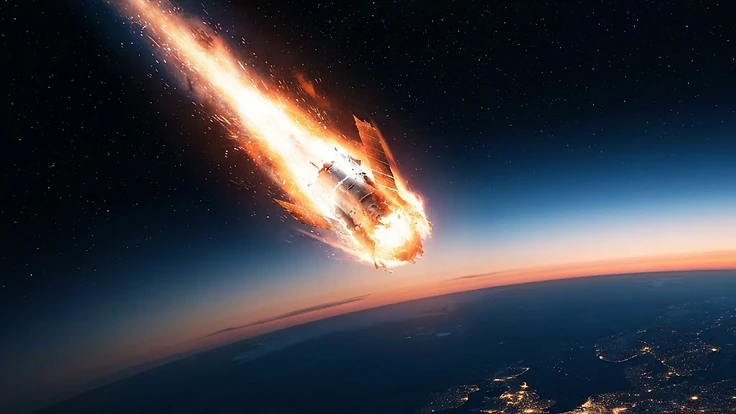
Satellite reentry is the process where human-made objects in orbit descend into the denser layers of the atmosphere, ultimately burning up or crashing back to Earth. As objects travel at incredible speeds, the friction caused by the thin upper atmosphere eventually slows them down, leading to a loss of altitude that creates a chain reaction of descent.
While space is often viewed as a vacuum, it is not entirely empty. Low Earth orbit contains traces of gas that create drag, and this subtle force is the primary driver of orbital decay for craft like the International Space Station, which orbits at approximately 408 kilometres above our planet.
The Science Behind It
The fundamental cause of reentry is atmospheric drag. Even at high altitudes, individual particles of air collide with a satellite, causing it to lose kinetic energy. As the satellite slows, its orbit dips lower, placing it into even thicker atmosphere, which accelerates the process of decay further.
Solar activity plays a major role in this cycle. During periods of high solar activity, the Earth's atmosphere heats up and expands outward, increasing the density at orbital altitudes. You can learn more about how these solar cycles influence our orbital environment by exploring the Understanding the Sunspot Cycle and Its Influence on Earth resource.
Gravity eventually pulls the craft toward the ground as its speed drops below the threshold required to remain in a stable orbit. At this point, the craft strikes the denser atmosphere at thousands of kilometres per hour. The resulting friction generates intense heat, which frequently causes the object to disintegrate before it reaches the surface.
Real-World Implications
The increasing volume of objects in orbit has transformed reentry from a rare event into a standard logistical challenge for space agencies. Protecting surface assets and aviation routes requires precise tracking of these reentering objects to determine if and where debris might land.
Geomagnetic activity, measured by the [Kp](/ #kp) index, can complicate these predictions by changing atmospheric density rapidly. When a significant storm occurs, it can cause satellites to drop in altitude much faster than anticipated, forcing operators to conduct emergency manoeuvres to maintain their position.
Space situational awareness is essential for modern technology and communication infrastructure. Without constant monitoring, the risk of collisions or unexpected reentry events would threaten the safety of global space missions and the sustainability of the near-Earth environment. You might find it interesting to look into the broader context of The Growing Reality of Human-Made Debris in Near-Earth Orbit.
What You Can Do
Staying informed about the space environment is easier than ever with modern digital tools. You can use trackers to watch the current positions of known satellites as they navigate the orbital landscape, a process explained in our guide on Tracking Satellites Across the Night Sky.
If you are interested in space weather, Flarient offers a live dashboard that provides real-time data on geomagnetic conditions and solar activity. These tools allow enthusiasts to monitor the same environmental factors that influence orbital decay and atmospheric density.
Those who prefer to keep their eyes on the stars can also use these tools to plan observations for atmospheric events. Whether you are tracking debris or hunting for the aurora, having the right information at your fingertips improves the experience for every observer.
For travellers who want expertise over guesswork, guided Northern Lights excursions in Sweden, Scotland and Alaska pair you with photographers who read the aurora oval in real time.
Key Takeaways
Satellite reentry is a natural result of atmospheric drag acting on objects in low Earth orbit. While the process can be gradual for years, the final descent is rapid and influenced by solar-driven atmospheric changes.
Reliable predictions rely on sophisticated modelling of both the object's orbit and the state of our upper atmosphere. Monitoring these changes helps protect infrastructure and enhances our understanding of the space environment.
As we continue to launch more satellites, our ability to track these objects remains a critical aspect of space flight safety. Staying engaged with current data is the best way to keep up with the evolving reality of our orbital space.
People Also Ask
How long do satellites stay in orbit?+
Satellites in low Earth orbit typically remain for months to years, depending on their altitude and solar activity. Objects above 800 kilometres can stay in orbit for centuries, while those at lower altitudes are pulled down by atmospheric drag much more quickly.
Does all satellite debris burn up on reentry?+
Not every piece of debris burns up completely. While most materials disintegrate due to intense frictional heat, large or dense components made of titanium or stainless steel can survive the descent and potentially reach the surface, though most controlled reentries are directed into remote ocean areas.
What is the Kármán line?+
The Kármán line is the internationally recognised boundary between Earth's atmosphere and outer space, located at 100 kilometres above sea level. Crossing this line is the common metric used to define when an object has officially reached space or, conversely, has reentered the atmosphere.
Continue Reading
Forecast These Questions
View all →Express your probability on these active forecast questions.
Related Articles

Satellite Operators Use Advanced Strategies to Mitigate Space Weather Risks
2026-11-10 · 5 min read

Understanding the Mechanics of Sun-Synchronous Orbits
2026-10-16 · 5 min read

Tracking the International Space Station in Real Time
2026-10-02 · 5 min read