Solar Flares Are Significantly Larger Than Earth
Solar flares are massive eruptive events on the Sun that dwarf our planet in scale. We explore the physics of these solar phenomena and why their reach extends across the entire solar system.
Solar Flares Are Significantly Larger Than Earth
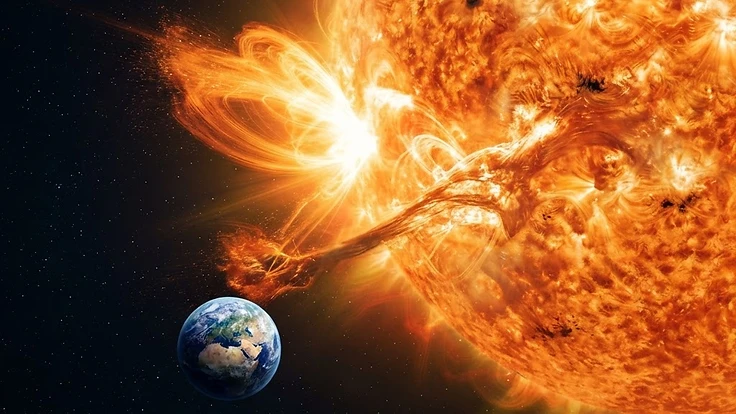
When we look at the Sun from our position in the sky, it appears as a bright, steady disc. In reality, our parent star is a roiling, magnetic furnace that frequently produces outbursts far larger than the planet we call home.
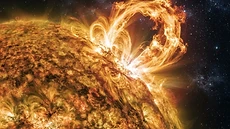
Solar flares are essentially localized explosions on the Sun. They occur when magnetic field lines snap and reconnect, releasing immense amounts of energy into the surrounding space. These events are not small sparks, but cataclysmic releases that regularly span distances many times the diameter of Earth.
Live Solar Flare Monitor
Powered by Flarient — embed this on your site →
The Science Behind It
Solar flares are classified by their X-ray brightness in the range of 1 to 8 Angstroms. The classes are designated as A, B, C, M, and X, with each letter representing a tenfold increase in energy output compared to the previous class.
An X-class flare is the most intense category and can cause long-lasting radiation storms. Since these flares occur within active regions on the Sun, their base often covers areas of the solar surface that are several times larger than the Earth.
This process is distinct from coronal mass ejections, which you can learn more about by reading our guide on understanding the mechanics of coronal mass ejections. While flares emit intense light and radiation, a coronal mass ejection involves the actual release of billions of tonnes of solar material into the heliosphere.
Both phenomena are driven by the intense twisting of magnetic fields as the Sun undergoes its solar cycle, which lasts approximately 11 years. We are currently in the midst of Solar Cycle 25, which began in December 2019.
Real-World Implications
Light and radiation from a flare travel at the speed of light, which is roughly 300,000 kilometres per second. This means the effects reach our upper atmosphere in only eight minutes, leading to immediate radio blackouts.
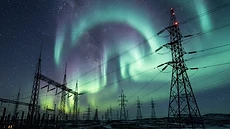
These blackouts disrupt high-frequency communications that are vital for aviation and maritime operations. If the flare is accompanied by a massive cloud of solar plasma, the resulting geomagnetic storm can create widespread issues for our power grids and satellite infrastructure.
Geomagnetic storms are measured using the G-scale, which ranges from G1 to G5. A storm reaching the G5 level can induce currents that stress electrical transformers, potentially causing large-scale power outages.
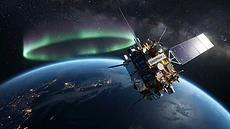
Satellites orbiting in the thermosphere, such as the International Space Station at an altitude of 408 kilometres, are also affected. Increased solar activity heats the upper atmosphere, causing it to expand and increase drag on these spacecraft, which can lead to orbital decay.
What You Can Do
Staying informed is the best defence against the unpredictable nature of space weather. You can monitor the current solar state by viewing high-resolution solar imagery from orbiting observatories to see active regions for yourself.
If you are interested in the visual rewards of solar activity, such as the aurora, you might consider planning a trip to see them in person. Many travellers enjoy guided aurora tours through beautiful landscapes in Iceland, Norway, Canada, Finland, Sweden, and Alaska.
For those who want to integrate this data into their own websites, you can use our embeddable widgets to display live space weather updates. These tools allow you to stay updated without having to manually parse complex raw data streams from the NOAA SWPC.
Key Takeaways
Solar flares are massive, explosive events that represent the raw power of our nearest star. Their scale, often dwarfing Earth by a significant margin, serves as a reminder of our position within a dynamic and active solar system.
Understanding these events is essential as our reliance on satellite technology and global power grids grows. By tracking indices and staying informed through resources like our storm leaderboard, we can better prepare for the space weather that impacts our modern infrastructure.
While we cannot stop the Sun from flaring, we can improve our resilience through better monitoring and awareness. Continued study of these processes helps us protect the technology that defines our modern existence.
People Also Ask
How often do X-class solar flares occur?+
X-class solar flares occur relatively frequently during the peak of a solar cycle, averaging around 10 times per year. However, their frequency fluctuates significantly depending on the phase of the 11-year solar cycle, with more occurring during solar maximum and far fewer during solar minimum.
Can solar flares cause the end of the world?+
No. While solar flares can damage satellites, disrupt radio communications, and overload power grids, they do not possess the power to destroy the Earth or wipe out the atmosphere. Our planet's magnetic field acts as a natural shield against the most harmful aspects of solar radiation.
What happens if an X-class flare hits Earth directly?+
A direct hit from a major X-class flare can cause intense ionization of the Earth's upper atmosphere. This results in significant radio blackouts, potential satellite navigation errors, and if accompanied by a coronal mass ejection, powerful geomagnetic storms that may stress global electrical infrastructure.
Continue Reading
Forecast These Questions
View all →Express your probability on these active forecast questions.