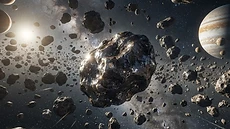
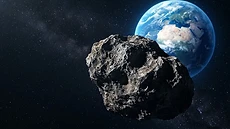
The Physics of Asteroids and Why They Lack Atmospheres
While science fiction often depicts asteroids with clouds or air, the reality is far more barren. Discover why these small space rocks cannot hold onto gas and what that means for our understanding of the solar system.
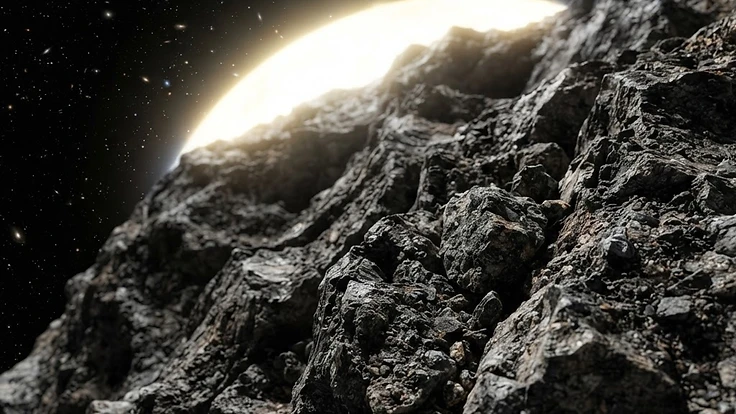
Asteroids Do Not Possess Atmospheres
Most people imagine space rocks as mini planets, complete with craters and perhaps a thin wisp of air. In reality, asteroids are airless voids drifting through the vacuum of space.
Near-Earth Asteroid Watch
Powered by Flarient — embed this on your site →
Unlike Earth or Mars, these bodies lack the gravitational pull necessary to cling to gases. They remain exposed, weathered only by the harsh realities of the solar wind and micro-meteoroid impacts over billions of years.
The Science Behind It
Gravity is the primary gatekeeper for an atmosphere. To retain a layer of gas, a celestial body must generate enough gravitational force to prevent gas molecules from escaping into the surrounding vacuum.
Asteroids simply do not have the mass for this. Even for a large near-Earth asteroid, the escape velocity is often no faster than a slow run.
Because of this low gravity, any gas molecules on the surface are lost almost instantly. The solar wind, a constant stream of charged particles flowing from the Sun at hundreds of kilometres per second, effectively strips away any transient gas clouds that might attempt to form.
This is why we do not see clouds or weather patterns on these bodies. The surface is exposed directly to the harsh environment of space, making the study of their composition a challenge of remote sensing rather than direct sampling.
Real-World Implications
Understanding that asteroids are airless is vital for space exploration and planetary defence. When NASA missions study these objects, they do not need to worry about landing through an atmospheric layer.
Instead, engineers must focus on landing on rocky, loose surfaces that behave like sand rather than solid rock. The lack of an atmosphere also means these objects are pristine samples of the early solar system.
These rocks contain materials unchanged by weather or geological cycles for millions of years. Scientists often refer to asteroids are distinctly larger than meteors as critical markers for understanding the history of our celestial neighbourhood.
When we track these objects, we look for orbital patterns and potential intersection with Earth. Monitoring them is a core part of keeping tabs on our space environment, similar to how we watch for solar flares that affect the solar cycle.
What You Can Do
If you have an interest in what passes through our cosmic backyard, you can start by tracking asteroid orbits using public data. Many observatories provide updated paths that show where these rocks are relative to Earth.
Keep in mind that these objects are not always as predictable as the weather, so using professional tools to visualise their movement is a great way to stay informed. You can integrate these visualisations into your own space-themed projects by using our embeddable widgets to share real-time tracking data with your community.
This allows you to keep an eye on close approaches and understand the scale of objects passing by. It is a fantastic way to learn about the dynamics of the solar system without needing a telescope of your own.
Key Takeaways
Asteroids remain stark, barren remnants of the early solar system. Their inability to hold an atmosphere is a direct result of their small size and weak gravitational fields.
While they lack the dynamic beauty of planets, they are treasure troves of scientific data. Learning about their nature helps us understand our own history and prepares us for potential future interactions.
By tracking their movements and understanding their physical properties, we gain a clearer picture of our place in the universe. Stay curious about the void and keep exploring the data provided by our latest space missions.
People Also Ask
Why can't asteroids hold an atmosphere?+
Asteroids have very low mass and weak gravity. Because their gravitational pull is insufficient, gas molecules simply drift away into space rather than remaining trapped as an atmosphere. The solar wind further strips away any temporary gas, leaving the surface permanently exposed to the vacuum.
What is the difference between an asteroid and a comet?+
Asteroids are primarily made of rock and metal. Comets are composed of ice, dust, and rock. As comets approach the Sun, their ices sublimate to form a coma or tail, which acts as a temporary, transient atmosphere, whereas asteroids remain inert rocks regardless of their proximity to the Sun.
Do any asteroids have moons?+
Yes, some asteroids have smaller moonlets orbiting them. These are known as binary or multiple-asteroid systems. While these moonlets are held in orbit by the asteroid's gravity, they are also airless, just like their parent bodies, due to the same lack of mass required to maintain an atmosphere.
Continue Reading
Forecast These Questions
View all →Express your probability on these active forecast questions.