Asteroids Do Not Emit Ionising Radiation
While asteroids are fascinating objects in our solar system, they do not produce dangerous radiation. Understand the distinction between rocky space bodies and high energy solar events.
Asteroids Do Not Emit Ionising Radiation
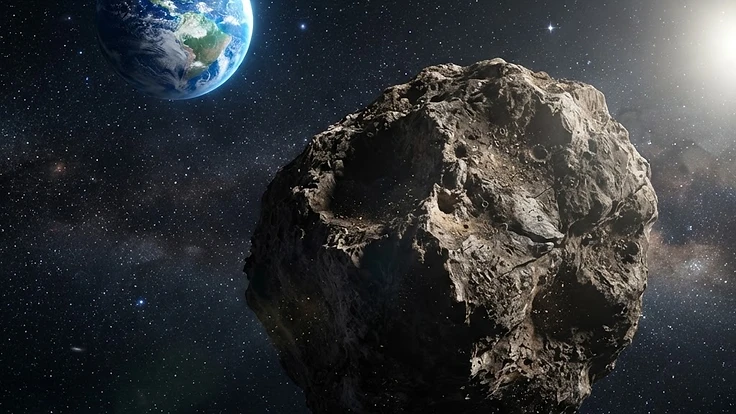
When people contemplate the dangers of space, they often conflate the physical threat of an impact with the invisible threat of radiation. It is a common misconception that asteroids behave like radioactive objects in deep space. In reality, these rocky remnants of the early solar system are inert bodies that do not generate or emit ionising radiation themselves.
Near-Earth Asteroid Watch
Powered by Flarient — embed this on your site →
While a large near-Earth asteroid could be catastrophic upon impact, the risk is purely kinetic. Understanding the difference between solid matter and high energy solar events is vital for anyone following space safety. By reviewing our archive of past events, you can see how scientists differentiate between various cosmic hazards that affect our planet.
The Science Behind It
Asteroids are primarily composed of silicates, metals, and carbonaceous materials. They lack the internal physics required to sustain the nuclear processes that result in significant radiation emission. Unlike a star, which produces energy through fusion, or a magnetar, which releases intense electromagnetic beams, an asteroid is geologically dead.
Some materials within an asteroid may contain trace amounts of naturally occurring radioisotopes, similar to rocks found on Earth. However, these levels are infinitesimal and pose no health risk to life on our planet. For a deeper understanding of how these materials interact with the environment, refer to our article on asteroids and their relation to ionising radiation.
Contrast this with solar activity, where massive explosions release streams of charged particles. These events, often linked to the Kp index, can flood our environment with radiation that poses risks to satellite infrastructure and human health. While an asteroid might pose a collision threat, the solar wind is the true driver of radiation in our immediate vicinity.
Real-World Implications
Because asteroids do not emit radiation, our planetary defence strategies remain focused on tracking trajectories and kinetic deflection methods. Organisations like NASA CNEOS monitor the sky to ensure that no near-Earth asteroid poses an unexpected threat. We track these objects to prevent collisions, not to measure potential radioactive fallout.
This separation of concerns allows scientists to focus resources on genuine hazards. When we look at space weather, we monitor the geomagnetic storm intensity, measured in nanoteslas on the Dst index. This infrastructure protects our electrical grids and telecommunications from solar disruptions that are far more frequent and damaging than asteroid impacts.
What You Can Do
Staying informed about your local environment is the best way to maintain peace of mind. While you do not need to worry about asteroid radiation, being aware of space weather helps you understand the world above. You can easily track these solar events by using embeddable widgets on your own website or dashboard to keep up to date with live telemetry.
If you have a passion for celestial phenomena, you might consider booking [guided aurora tours](https://vi.me/HuXHi) in countries such as Iceland, Norway, Canada, or Finland to experience the beauty of the auroral oval firsthand. These tours offer a fantastic way to engage with the natural consequences of solar activity.
Always remember to cross-reference your travel plans with local aurora forecast data to ensure the best viewing conditions.
Key Takeaways
Asteroids are physical objects that pose no radioactive risk to Earth. The radiation concerns associated with space are almost exclusively linked to solar particle events and solar wind. Understanding this distinction is essential for interpreting space weather reports accurately.
By distinguishing between kinetic impact hazards and electromagnetic radiation threats, you gain a clearer picture of our solar system. Continue to monitor the solar environment and track the progress of Solar Cycle 25 to stay ahead of space weather events. Knowledge is the ultimate tool for navigating the complexities of our place in the cosmos.
People Also Ask
Are asteroids radioactive?+
No, asteroids are not radioactive. While they contain trace amounts of naturally occurring isotopes similar to ordinary rocks on Earth, these levels are negligible. They lack the mass and internal processes required to generate, store, or emit the types of high-energy radiation that would be hazardous to humans.
What is the biggest threat from an asteroid?+
The primary threat from an asteroid is kinetic energy resulting from an impact. A collision would release energy through mechanical shock, heat, and displacement of material, potentially causing significant regional or global environmental damage. The threat is physical, not related to ionising radiation or radioactivity.
What actually causes radiation in space?+
Radiation in space is primarily caused by solar activity, including solar flares and coronal mass ejections, as well as galactic cosmic rays. These high-energy particles travel through space and can interact with planetary magnetic fields, creating hazards for satellites, electronic infrastructure, and astronauts outside the Earth's protective atmosphere.
Continue Reading
Forecast These Questions
View all →Express your probability on these active forecast questions.
Will a near-Earth object pass within 1 Lunar Distance this quarter?
35%
Community
Will a newly discovered asteroid larger than 10m pass within 5 LD this month?
5%
Community
Will a near-Earth object pass within 1 Lunar Distance this quarter?
35%
Community
Will a near-Earth object pass within 5 Lunar Distances this month?
5%
Community