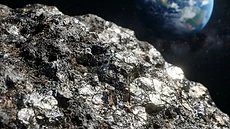
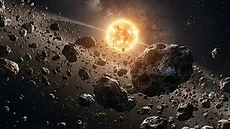
Earth Has Been Struck By Asteroids Throughout History
Asteroid impacts are not merely scenarios for disaster films. Our planet possesses a deep geological record of collisions that have fundamentally altered the course of life on Earth.
Earth Has Been Struck By Asteroids Throughout History
Earth is a target in a crowded cosmic shooting gallery. While most small space rocks burn up harmlessly in the atmosphere, larger objects have made impact throughout our planet's history. These events provide the scars we see on the surface today and offer lessons about our place in the solar system.
Near-Earth Asteroid Watch
Powered by Flarient — embed this on your site →
Understanding which asteroids have hit Earth helps scientists refine their models of planetary defence. By studying past impacts, we improve our ability to detect a potential near-Earth asteroid before it poses a threat. The scientific community treats these past events as a vital data set for our future survival.
The Science Behind It
An asteroid impact is a transfer of kinetic energy on a massive scale. When an object enters the atmosphere, it faces intense friction that slows it down and generates incredible heat. If the object remains intact, the final impact releases energy equivalent to millions of tonnes of TNT.
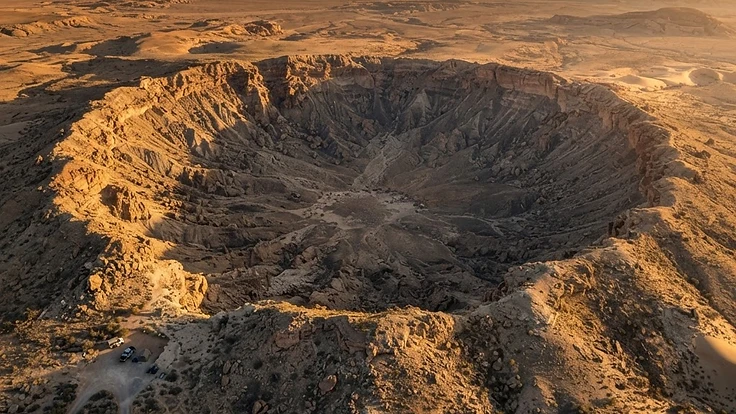
Many of these craters are difficult to spot because of erosion, weather, and plate tectonics. The most famous example is the Chicxulub crater, which was formed by an object roughly 10 kilometres wide hitting the Yucatán Peninsula 66 million years ago. This specific event is widely credited with the extinction of non-avian dinosaurs.
Researchers study these sites to determine the size and composition of the impactor. We can learn more about these geological signatures in the glossary, which details how craters are confirmed and classified. Each crater tells a story about the velocity and trajectory of the object that struck our world.
Real-World Implications
While a massive impact is a rare event, the awareness of potential hazards drives global space agencies to monitor the skies. We track tens of thousands of objects in our archive to ensure that we are not surprised by a stray rock from the outer solar system. This is a collaborative effort involving telescopes and radar systems across every continent.
These systems allow us to calculate precise orbits and predict whether an object will experience a close approach. If an object is flagged, the scientific community analyses its path to determine the probability of impact. This work is essential for long-term planetary safety, as detailed in our guide on history records Earth's violent asteroid impacts.
Technology is now sophisticated enough to spot smaller objects far in advance. Our modern capability is a far cry from the observations of the past, as we can now model the potential effects of an impact with high precision. This constant vigilance ensures that society remains informed about the space environment.
What You Can Do
Staying informed about the sky above requires a proactive approach. You do not need to be an astronomer to participate in the conversation about space safety. Many tools exist to help you visualise the paths of objects currently travelling through our local neighbourhood.
Platforms like Flarient provide access to data that was once restricted to professional researchers. You can explore the widgets to see how simple it is to track celestial activity and stay updated on the latest scientific findings. Monitoring these trends is a great way to understand the dynamics of our orbit.
Engage with the community to learn more about how we categorise space phenomena. By checking the leaderboard for recent events or tracking updates in real time, you gain a better appreciation for the scale of the cosmos. Preparedness starts with education and the simple habit of watching the sky.
Key Takeaways
Earth is an active participant in a busy solar system. Although major impacts are separated by millions of years, the evidence of our planet's history is written in the craters that define its surface. We have moved from simple observation to advanced tracking and modelling.
Continued investment in space situational awareness is the best insurance for our future. By maintaining a clear understanding of the celestial construction of asteroids, we ensure that we are prepared for whatever the future might hold. Stay curious and keep looking up at the night sky.
People Also Ask
How often do asteroids hit Earth?+
Small asteroids hit Earth daily, but they usually burn up in the atmosphere as meteors. Larger impacts, capable of causing regional damage, occur once every few thousand years. Catastrophic impacts that alter the global climate happen on much longer timescales, typically once every few million years.
Are there any asteroids currently heading for Earth?+
NASA and other space agencies maintain lists of objects with a non-zero probability of impact. Currently, there are no known asteroids that pose a significant threat to Earth within the next century. Scientists continue to monitor the skies daily to update these risk assessments.
Can we stop an asteroid from hitting Earth?+
Planetary defence strategies involve techniques like the kinetic impactor, which uses a spacecraft to nudge an asteroid off its collision course. We successfully tested this method with the DART mission, proving we can alter the trajectory of a celestial object if given enough warning.
Continue Reading
Forecast These Questions
View all →Express your probability on these active forecast questions.
Will a near-Earth object pass within 1 Lunar Distance this quarter?
35%
Community
Will a newly discovered asteroid larger than 10m pass within 5 LD this month?
5%
Community
Will a near-Earth object pass within 1 Lunar Distance this quarter?
35%
Community
Will a near-Earth object pass within 5 Lunar Distances this month?
5%
Community