How Satellites Monitor the Ever Changing Space Weather
Space weather directly impacts our technology and power grids. Learn how dedicated satellites observe solar activity and protect our vital infrastructure.
Satellites Monitor the Constant Flux of Space Weather
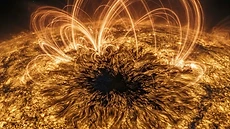
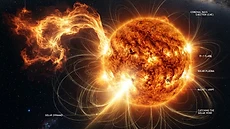
Space weather might sound like science fiction, but it is a tangible force that dictates the health of our global infrastructure. It begins on the surface of the sun, where magnetic activity creates eruptions that send particles hurtling through the solar system. While Earth enjoys the protection of its magnetic field, extreme events can disrupt communication, power grids, and satellite operations in orbit.
Live Space Weather Dashboard
Powered by Flarient — embed this on your site →
Understanding these phenomena requires constant observation from space, allowing scientists to analyse and predict conditions before they reach our planet.
Technological dependence has made us vulnerable to solar interference, making space weather monitoring a matter of national and global security. By tracking the sun, we can prepare for the arrival of solar wind and coronal mass ejections. This proactive approach helps operators take protective measures, ensuring that the satellites we rely on for navigation, finance, and communication remain operational.
Monitoring these forces is a delicate task that demands a fleet of specialised spacecraft stationed at strategic points in the solar system.
The Physics Behind Solar Observation
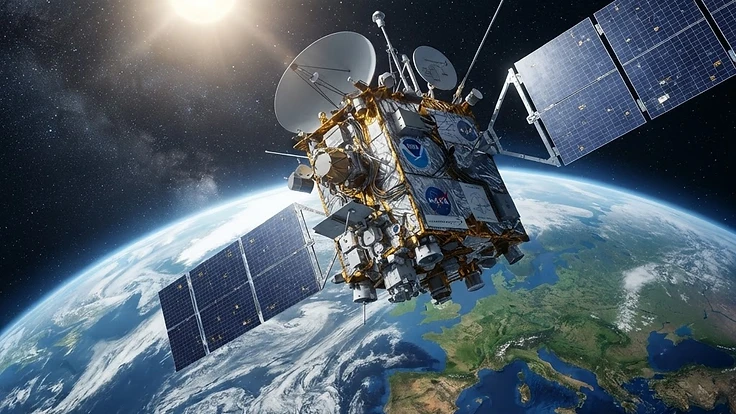
To study space weather, scientists position satellites where they can observe the sun without the obstruction of Earth's atmosphere. The Deep Space Climate Observatory, or DSCOVR, orbits at the L1 Lagrange point, which provides a clear view of incoming solar wind about one million miles from Earth. This location acts as an early warning station, capturing data on solar wind density and speed before it hits our magnetosphere.
Other spacecraft, such as the Solar and Heliospheric Observatory, utilise advanced solar imagery to monitor the sun's surface and corona. By analysing this visual data, researchers can identify the magnetic signatures of solar flares, which are classified by strength from A to X. When a massive event occurs, these instruments measure the velocity of material ejected into space, which can reach speeds of 3,000 kilometres per second.
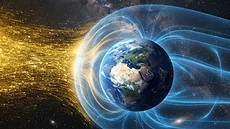
Researchers also study how these events interact with Earth's protective shell, a process often described in How Solar Wind Shapes Earth's Magnetosphere. Satellites orbiting within the magnetosphere detect shifts in magnetic intensity, often measured by the Dst index. A negative shift in this index suggests a geomagnetic storm is forming, and the severity is typically categorised using the K-index or the G-scale ranging from G1 to G5.
Real-World Implications of Solar Activity
When a significant solar storm hits Earth, the consequences ripple through our modern world. High-energy particles can ionise the upper atmosphere, causing signals for GPS and high-frequency radio to drift or fail entirely. Pilots, shipping companies, and even hikers relying on satellite navigation must account for these potential inaccuracies during peak solar activity.
You can learn more about these risks in our analysis on monitoring solar storms to protect satellite infrastructure.
Power grids are particularly susceptible to the currents induced by changing magnetic fields. During an extreme geomagnetic storm, these currents can overload transformers, potentially leading to regional blackouts that are costly and time-consuming to repair. Beyond ground-based damage, the satellites orbiting at 408 kilometres, like the International Space Station, must carefully manage their exposure to radiation.
Ensuring that hardware is shielded is a priority for agencies, as discussed in satellite shielding against the growing menace of space debris.
What You Can Do To Stay Informed
Keeping track of space weather does not require a degree in astrophysics. Many online resources provide live data streams, allowing you to monitor geomagnetic storm levels from your home or office. If you are interested in witnessing the atmospheric beauty caused by these storms, look into [guided aurora tours](https://vi.me/HuXHi) in locations like Iceland, Norway, Canada, or Alaska.
These professional services use real-time weather data to help you find the best aurora displays in the night sky.
For those who prefer a digital approach, you can utilise embeddable widgets on your own website to share real-time alerts with your audience. Staying prepared means understanding the trends, whether you are tracking near-Earth asteroid close approaches or watching for the next solar cycle peak. By using free tools to monitor current solar activity, you can better understand how these celestial events influence our environment.
Resources found in the glossary can also help clarify the technical terms often used in space weather reports.
Key Takeaways of Space Monitoring
Satellites have fundamentally changed our relationship with the sun, shifting us from passive targets to informed observers. By maintaining a continuous watch on solar wind and magnetic activity, we protect the technology that defines contemporary life. This scientific diligence ensures we have precious time to react before solar plasma strikes our atmosphere.
While space weather remains a powerful, untameable force, our ability to forecast its arrival continues to improve with every passing solar cycle. We are no longer blind to the sun's temperamental outbursts. By staying educated and utilising available data, anyone can grasp the essential mechanics of our sun and the impact it leaves on our fragile orbit.
People Also Ask
What is the Kp index?+
The Kp index is a global geomagnetic activity index that measures disturbances in Earth's magnetic field. It ranges from 0 to 9, where lower numbers indicate quiet conditions and higher numbers indicate significant geomagnetic storm activity that can trigger auroras.
How fast do solar flares reach Earth?+
While the light from a solar flare travels at approximately 300,000 kilometres per second and reaches Earth in about eight minutes, the physical particles from a coronal mass ejection travel much slower. These clouds of solar plasma typically take between one and three days to arrive at Earth.
Can solar storms damage home electronics?+
While extremely intense solar storms can impact large-scale infrastructure like power grids and long-distance communication lines, most consumer electronics in homes are generally safe from standard solar weather. The primary risk from space weather is to satellites in orbit and high-voltage electrical grid transformers.
Continue Reading
Forecast These Questions
View all →Express your probability on these active forecast questions.