The Mechanics of Solar Flare Formation
Solar flares are massive eruptions of energy caused by magnetic instability on the Sun. Understanding how they form is key to anticipating their impact on our technological world.
The Mechanics of Solar Flare Formation
The Sun is a dynamic ball of plasma governed by complex magnetic fields. Occasionally, these fields become twisted and knotted, storing immense energy that releases in sudden, brilliant flashes known as solar flares.
Live Solar Flare Monitor
Powered by Flarient — embed this on your site →
These events are far more than simple light shows. They represent the most powerful explosions in our solar system, capable of disrupting systems we rely on daily.
The Science Behind It
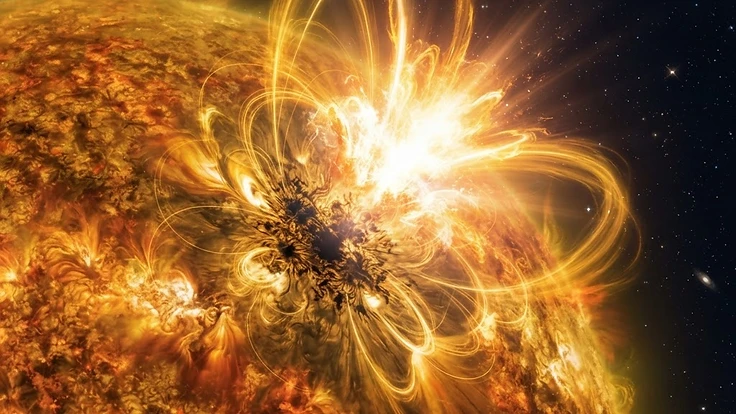
Solar flares occur near sunspots where magnetic field lines are extremely strong and tightly packed. As the Sun rotates, these magnetic field lines get tangled and eventually snap under the immense pressure.
This process is called magnetic reconnection. It functions like a coiled spring suddenly snapping back, releasing a torrent of radiation across the electromagnetic spectrum.
Scientists use solar imagery from observatories like the Solar Dynamics Observatory to monitor these active regions. The flares are classified by their X-ray intensity, ranging from A and B to C, M, and X, with each letter representing a tenfold increase in power.
Understanding these cycles is vital, especially as we advance through Solar Cycle 25, which began in late 2019. While flares travel at the speed of light, their counterparts, coronal mass ejections, travel much slower and carry matter that triggers geomagnetic storms.
Real-World Implications
When radiation from a flare reaches Earth, it ionises the upper atmosphere. This can cause significant radio blackouts for high-frequency communications.
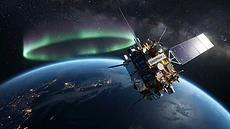
For satellites, the risk is twofold. Increased radiation can damage delicate electronics, while the subsequent heating of the upper atmosphere increases drag, leading to orbital decay.
If the flare coincides with a geomagnetic storm, the impact on power grids becomes a concern. We use the Kp index to measure the intensity of the resulting geomagnetic activity.
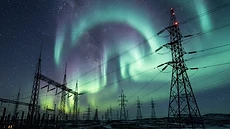
Extreme storms can induce currents in long-distance transmission lines. While rare, events like the Carrington Event of 1859 serve as a reminder of the potential for large-scale infrastructure damage.
What You Can Do
Staying informed is the best defence against space weather events. You can monitor current solar activity by visiting our live dashboard, where we track real-time flare activity and magnetic conditions.
If you are interested in witnessing the atmospheric response to these events, we recommend [guided aurora tours](/https://vi.me/HuXHi) across locations like Iceland, Norway, and Canada for the best chances of viewing an auroral display. Those managing technical infrastructure can benefit from using embeddable widgets to track solar weather directly on their own websites or internal dashboards.
Regularly reviewing past events helps in modelling future risks. Even if you are not an expert, knowing the basics of how these events unfold helps you interpret the data.
Key Takeaways
Solar flares are fundamentally a result of magnetic energy release within the solar atmosphere. They represent a significant component of space weather that influences Earth and our orbital assets.
By tracking the Sun through cycles and understanding the physics of reconnection, we can better prepare for potential disruptions. Modern tools allow anyone from amateur observers to infrastructure managers to stay ahead of the next big eruption.
People Also Ask
What is the difference between a solar flare and a CME?+
A solar flare is an intense burst of radiation caused by magnetic reconnection. A coronal mass ejection, or CME, is a massive eruption of solar plasma and magnetic field lines. While they often occur together, flares travel at light speed, whereas CMEs move much slower through space.
How long do solar flares last?+
Solar flares are relatively short-lived events, typically lasting anywhere from a few minutes to several hours. The most intense energy release usually happens in the initial minutes of the event, after which the radiation levels gradually subside back to normal background levels.
Can solar flares be predicted?+
While scientists can monitor the build-up of magnetic stress in sunspot regions, predicting the exact moment a flare will occur remains difficult. Experts track the complexity of magnetic regions to provide probabilistic forecasts of flare potential over the coming 24 to 48 hours.
Continue Reading
Forecast These Questions
View all →Express your probability on these active forecast questions.